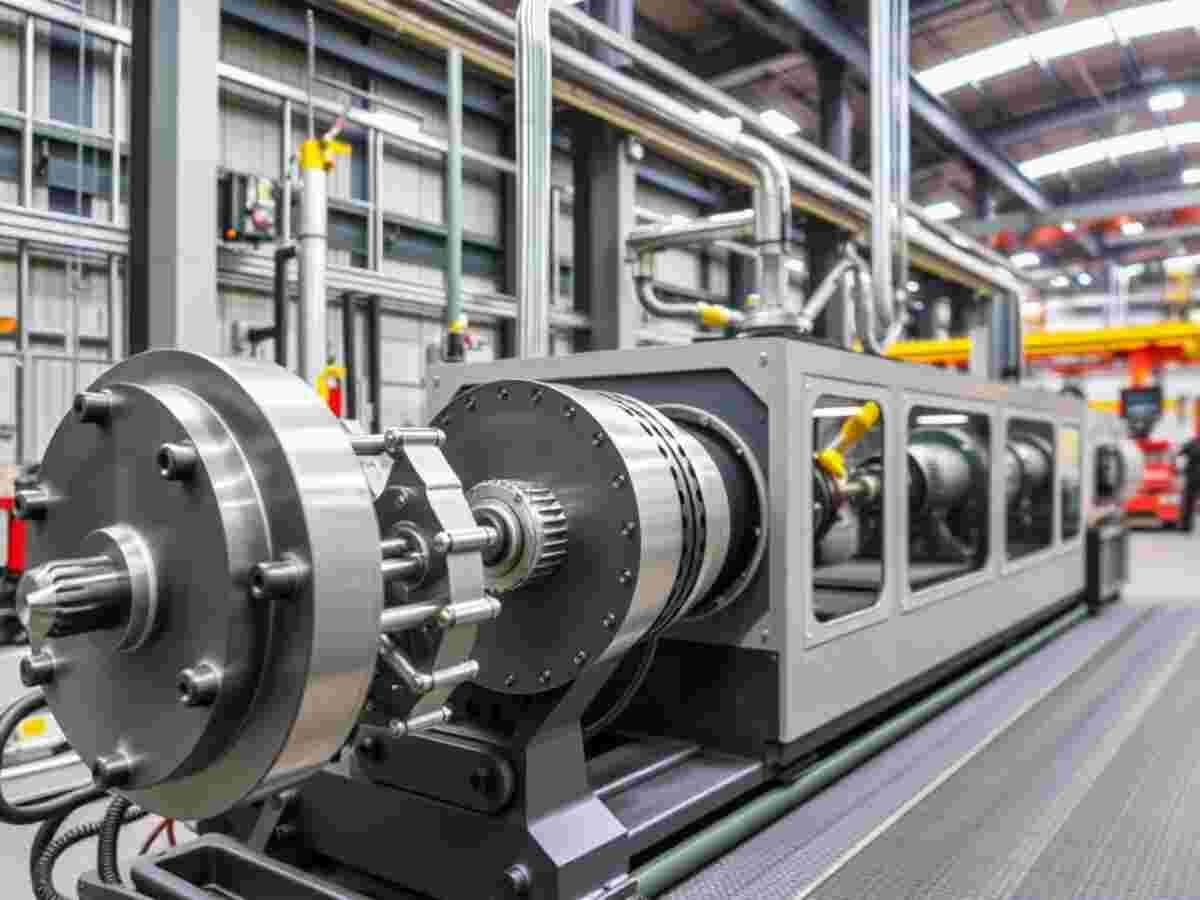
Extrusion is essential in manufacturing because it allows continuous production of products with consistent shapes. Unlike processes that create individual items, extrusion produces long lengths of material that can be cut to size. This makes it highly efficient for high-volume production. The process works by heating or softening a material and pushing it through a shaped die. As the material exits the die, it takes on the desired form. Depending on the material and application, extrusion can be performed at different temperatures and pressures. Extrusion technology is used in: Plastic products such as pipes, sheets, and films Food items like pasta, cereals, and snacks Metal components such as aluminum profiles Rubber and composite materials Because of its versatility, extrusion remains a core process across multiple industries.
Benefits of Extrusion Technology
1. Continuous Production
Extrusion allows uninterrupted manufacturing, improving productivity and efficiency.
2. Consistent Product Quality
The process produces uniform shapes with precise dimensions.
3. Material Efficiency
Extrusion minimizes waste, as excess material can often be reused.
4. Design Flexibility
Different die shapes allow a wide range of product designs.
5. Cost-Effective for High Volumes
Once set up, extrusion is efficient for large-scale production.
6. Versatility Across Materials
Extrusion can be used with plastics, metals, food materials, and more.
Limitations of Extrusion Technology
1. Initial Setup Costs
Designing and manufacturing dies can be expensive.
2. Limited to Uniform Cross-Sections
Extrusion is best suited for products with consistent shapes along their length.
3. Temperature Sensitivity
Incorrect temperature control can affect product quality.
4. Material Limitations
Not all materials are suitable for extrusion.
5. Maintenance Requirements
Equipment such as screws and dies require regular maintenance.
Types and Categories of Extrusion Processes
Extrusion technology includes several process types depending on material and application.
1. Hot Extrusion
Performed at high temperatures, commonly used for metals like aluminum.
2. Cold Extrusion
Conducted at room temperature, often used for improved surface finish and strength.
3. Warm Extrusion
A combination of hot and cold extrusion, balancing energy use and material properties.
4. Plastic Extrusion
Widely used for producing plastic pipes, films, and sheets.
5. Food Extrusion
Used to produce processed foods such as cereals and snack products.
6. Blow Film Extrusion
Creates thin plastic films used in packaging.
7. Sheet Extrusion
Produces flat plastic sheets for various applications.
Comparison Table: Common Extrusion Types
| Extrusion Type | Temperature | Materials | Typical Applications |
|---|---|---|---|
| Hot Extrusion | High | Metals | Structural components |
| Cold Extrusion | Low | Metals | Precision parts |
| Plastic Extrusion | Medium | Polymers | Pipes, films |
| Food Extrusion | Variable | Food materials | Snacks, cereals |
| Blow Film | Medium | Plastics | Packaging films |
| Sheet Extrusion | Medium | Plastics | Panels, sheets |
Latest Trends and Innovations in Extrusion Technology
1. Energy-Efficient Systems
Modern extrusion machines are designed to reduce power consumption and improve sustainability.
2. Advanced Automation
Automated controls improve precision, reduce human error, and enhance consistency.
3. Smart Monitoring and IoT
Sensors and connected systems allow real-time tracking of temperature, pressure, and output.
4. Sustainable Materials
Extrusion processes are adapting to biodegradable and recycled materials.
5. Multi-Layer Extrusion
Allows production of products with multiple material layers for improved performance.
6. High-Speed Extrusion
New technologies enable faster production without compromising quality.
Key Features to Consider When Evaluating Extrusion Systems
1. Material Compatibility
Ensure the system can handle the specific material being used.
2. Production Capacity
Match machine output with production requirements.
3. Temperature Control
Accurate temperature regulation is essential for product quality.
4. Screw Design
Different screw configurations affect mixing, melting, and output.
5. Die Design
The die determines the final shape and quality of the product.
6. Energy Efficiency
Efficient machines reduce operational costs.
7. Automation Level
Advanced controls improve consistency and reduce manual intervention.
8. Maintenance Accessibility
Easy access to components simplifies servicing.
Leading Companies in Extrusion Technology
The following companies are known for extrusion equipment and solutions:
| Company | Known For | Public Website |
|---|---|---|
| Bühler Group | Food extrusion systems | https://www.buhlergroup.com |
| KraussMaffei | Plastic extrusion technology | https://www.kraussmaffei.com |
| Coperion | Compounding and extrusion | https://www.coperion.com |
| Davis-Standard | Plastic processing systems | https://www.davis-standard.com |
| Milacron | Polymer processing equipment | https://www.milacron.com |
These companies provide technical documentation, system designs, and application-specific solutions.
How to Choose the Right Extrusion Technology
Step 1: Define Application Needs
Identify the product type, material, and desired output.
Step 2: Analyze Material Properties
Understand melting temperature, viscosity, and behavior under pressure.
Step 3: Determine Production Volume
Choose equipment that meets capacity requirements.
Step 4: Evaluate System Features
Compare temperature control, automation, and energy efficiency.
Step 5: Consider Future Scalability
Select systems that can adapt to increased production.
Step 6: Review Supplier Support
Check availability of technical support and spare parts.
Step 7: Test and Validate
Conduct trials to ensure the system meets performance expectations.
Extrusion Technology Selection Checklist
- Application requirements defined
- Material compatibility confirmed
- Production capacity evaluated
- Temperature control system reviewed
- Die and screw design assessed
- Energy efficiency considered
- Automation features evaluated
- Maintenance requirements reviewed
- Supplier support checked
- Budget planned
Tips for Best Use and Maintenance
- Monitor temperature and pressure consistently
- Clean dies and screws regularly to prevent buildup
- Use high-quality raw materials
- Train operators on system controls
- Perform routine inspections and maintenance
- Replace worn components promptly
- Optimize settings for different materials
Frequently Asked Questions About Extrusion Technology
1. What materials can be used in extrusion?
Extrusion is commonly used with plastics, metals, and food materials.
2. Is extrusion suitable for small-scale production?
It is more efficient for medium to large production volumes.
3. How does extrusion differ from injection molding?
Extrusion produces continuous shapes, while injection molding creates individual parts.
4. What affects extrusion quality?
Temperature, pressure, material quality, and die design all influence results.
5. Can extrusion processes be automated?
Yes, modern systems include advanced automation features.
6. How often should extrusion equipment be serviced?
Regular maintenance schedules depend on usage and manufacturer recommendations.
7. Is extrusion environmentally sustainable?
With proper material selection and energy-efficient systems, extrusion can support sustainability goals.
Conclusion: A Practical Takeaway
Extrusion technology is a fundamental manufacturing process that supports the production of a wide range of products across industries. Its ability to deliver consistent quality, efficient production, and design flexibility makes it an essential tool for modern manufacturing.
Selecting the right extrusion system requires careful evaluation of materials, production needs, and system capabilities. With ongoing advancements in automation, sustainability, and process control, extrusion technology continues to evolve and meet the demands of modern industries.
By understanding its principles and applications, manufacturers and professionals can make informed decisions that improve efficiency, product quality, and long-term operational success.