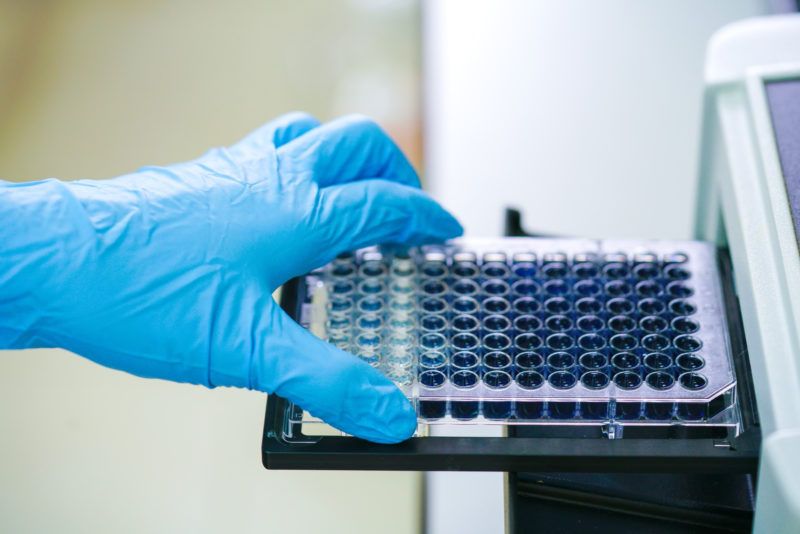
Assays are essential tools for understanding biological systems and detecting specific molecules such as proteins, DNA, enzymes, or chemicals. In healthcare, assays are used for diagnosing diseases, monitoring treatment responses, and screening for infections. In research, they help scientists study biological processes and evaluate experimental results. The quality of an assay directly affects the accuracy of the data it produces. Poorly designed assays can lead to incorrect conclusions, while well-developed assays provide reliable insights. As scientific research becomes more complex, the demand for precise and efficient assays continues to grow. Assay development is therefore a structured process that includes selecting appropriate methods, optimizing conditions, and validating performance before routine use.
Benefits of Assay Development
1. Accurate Measurement
Well-designed assays provide precise and reliable data for research and diagnostics.
2. Early Disease Detection
Diagnostic assays can identify diseases at early stages, improving treatment outcomes.
3. Support for Drug Development
Assays are used to evaluate the effectiveness and safety of new drugs.
4. Reproducibility
Standardized assays ensure consistent results across different laboratories.
5. High Throughput Screening
Modern assays allow testing of large numbers of samples efficiently.
6. Versatility
Assays can be adapted for various applications, including clinical testing, environmental analysis, and food safety.
Limitations and Challenges of Assay Development
1. Time-Intensive Process
Developing and validating assays can require significant time and effort.
2. Cost Considerations
Equipment, reagents, and skilled personnel can increase costs.
3. Sensitivity and Specificity Issues
Achieving the right balance between detecting target substances and avoiding false results can be challenging.
4. Technical Complexity
Some assays require specialized equipment and expertise.
5. Variability
Environmental factors or sample differences can affect results.
Types and Categories of Assays
Assays can be classified based on their methodology and application.
1. Biochemical Assays
Measure chemical reactions or enzyme activity.
2. Immunoassays
Use antibodies to detect specific proteins or molecules.
3. Molecular Assays
Analyze DNA or RNA, often used in genetic testing.
4. Cell-Based Assays
Study biological activity within living cells.
5. Enzyme-Linked Assays
Detect substances using enzyme reactions.
6. Colorimetric Assays
Measure changes in color to indicate the presence of a substance.
7. Fluorescence-Based Assays
Use fluorescent signals for detection and quantification.
Comparison Table: Common Assay Types
| Assay Type | Detection Method | Typical Use | Key Advantage |
|---|---|---|---|
| Biochemical | Chemical reaction | Enzyme studies | Simple and direct |
| Immunoassay | Antibody binding | Diagnostics | High specificity |
| Molecular | DNA/RNA analysis | Genetic testing | High sensitivity |
| Cell-Based | Living cells | Drug testing | Biological relevance |
| Colorimetric | Color change | Lab analysis | Easy to interpret |
| Fluorescent | Light emission | Advanced research | High sensitivity |
Latest Trends and Innovations in Assay Development
1. Automation and High-Throughput Systems
Automated platforms enable rapid testing of thousands of samples.
2. Microfluidics Technology
Miniaturized systems reduce reagent use and improve efficiency.
3. Artificial Intelligence Integration
AI helps analyze complex data and optimize assay design.
4. Point-of-Care Testing
Portable assays allow testing outside traditional laboratories.
5. Multiplex Assays
Enable detection of multiple targets in a single test.
6. Digital Assays
Provide highly precise quantification of molecules.
Key Features to Consider When Evaluating Assays
1. Sensitivity
Ability to detect small amounts of a substance.
2. Specificity
Ability to distinguish the target from similar substances.
3. Reproducibility
Consistency of results across repeated tests.
4. Speed
Time required to obtain results.
5. Cost Efficiency
Balance between performance and cost.
6. Ease of Use
User-friendly protocols reduce errors.
7. Scalability
Ability to handle increasing sample volumes.
8. Regulatory Compliance
Meeting standards for clinical or industrial use.
Leading Companies and Solutions in Assay Development
The following companies are recognized for assay technologies and laboratory solutions:
| Company | Known For | Public Website |
|---|---|---|
| Thermo Fisher Scientific | Assay kits and instruments | https://www.thermofisher.com |
| Bio-Rad Laboratories | Research and diagnostic assays | https://www.bio-rad.com |
| Danaher | Diagnostics and life sciences tools | https://www.danaher.com |
| PerkinElmer | Detection and assay systems | https://www.perkinelmer.com |
| Agilent Technologies | Laboratory and assay solutions | https://www.agilent.com |
These organizations provide platforms, reagents, and technical support for assay development.
How to Choose the Right Assay Development Approach
Step 1: Define the Objective
Identify what needs to be measured and why.
Step 2: Select the Appropriate Assay Type
Choose a method suited to the target substance and application.
Step 3: Evaluate Sensitivity and Specificity Needs
Ensure the assay meets accuracy requirements.
Step 4: Consider Sample Type
Different assays work better with certain sample types.
Step 5: Assess Equipment and Resources
Check availability of required instruments and expertise.
Step 6: Optimize Conditions
Adjust variables such as temperature, pH, and reagent concentrations.
Step 7: Validate the Assay
Test performance to ensure reliability and reproducibility.
Assay Development Checklist
- Objective clearly defined
- Target analyte identified
- Assay type selected
- Sensitivity and specificity evaluated
- Sample type confirmed
- Equipment availability checked
- Protocol optimized
- Validation completed
- Cost considerations reviewed
- Documentation prepared
Tips for Best Use and Maintenance
- Follow standardized protocols carefully
- Calibrate equipment regularly
- Use high-quality reagents
- Maintain consistent environmental conditions
- Train personnel thoroughly
- Document all procedures and results
- Monitor assay performance over time
Frequently Asked Questions About Assay Development
1. What is the purpose of an assay?
An assay measures the presence, quantity, or activity of a substance.
2. How long does assay development take?
The timeline varies depending on complexity and application.
3. What is the difference between sensitivity and specificity?
Sensitivity refers to detecting small amounts, while specificity refers to identifying the correct target.
4. Can assays be automated?
Yes, many modern assays are designed for automated systems.
5. Are assays used only in laboratories?
No, some assays are used in clinical settings and point-of-care testing.
6. How is assay accuracy ensured?
Through validation, calibration, and quality control processes.
7. What industries use assay development?
Healthcare, pharmaceuticals, environmental science, and food safety all use assays.
Conclusion: A Practical Takeaway
Assay development is a critical process that supports accurate measurement and analysis in science and healthcare. From diagnosing diseases to advancing research, assays provide essential data that guides decision-making.
While developing an assay requires careful planning, optimization, and validation, the benefits of reliable and reproducible results make it a valuable investment. Advances in technology continue to improve assay performance, making them faster, more efficient, and more accessible.
By understanding assay types, key features, and selection criteria, users can choose appropriate solutions that meet their needs. With proper implementation and maintenance, assay systems can deliver consistent results and contribute to progress in research, diagnostics, and beyond.