Industrial panels are an important part of modern electrical and automation systems. They provide a structured location for electrical components, control devices, protection equipment, monitoring instruments, and automation hardware. By organizing these elements inside a suitable enclosure, industrial panels help operators manage equipment and electrical processes more effectively.
They can be found in manufacturing facilities, processing plants, commercial infrastructure, water treatment systems, energy facilities, and many other industrial environments. The design of a panel depends on factors such as the equipment being controlled, electrical requirements, environmental conditions, safety considerations, and the level of automation involved.
Understanding the basic principles behind industrial panels can make it easier to evaluate different configurations and determine which characteristics are important for a particular application.
What Is an Industrial Panel?
An industrial panel is an enclosure or assembled control system that contains electrical, electronic, and automation components used to distribute power, protect circuits, monitor equipment, or control industrial processes.
A typical panel may contain circuit protection devices, switches, contactors, relays, terminal blocks, programmable logic controllers, variable frequency drives, power supplies, meters, and communication equipment.
The panel enclosure provides physical organization and helps protect internal components from environmental factors. Depending on its application, an enclosure may need to withstand dust, moisture, heat, vibration, chemicals, or other operating conditions.
Industrial panels can range from relatively simple electrical distribution enclosures to sophisticated automation control systems containing numerous interconnected devices.
Common Types of Industrial Panels
Different industrial processes require different panel configurations. Several common types are used across manufacturing and infrastructure environments.
Electrical Distribution Panels
Electrical distribution panels divide incoming electrical power into multiple circuits. They typically incorporate protective devices that help isolate individual circuits when abnormal electrical conditions occur.
These panels are commonly used in factories, facilities, production areas, and large commercial buildings where power must be distributed to multiple loads.
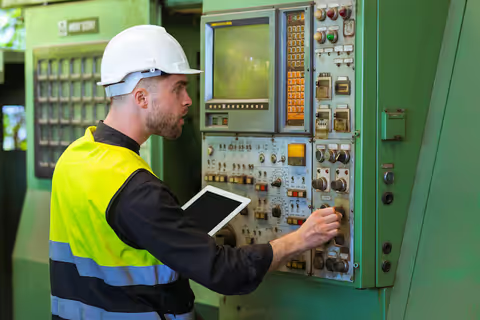
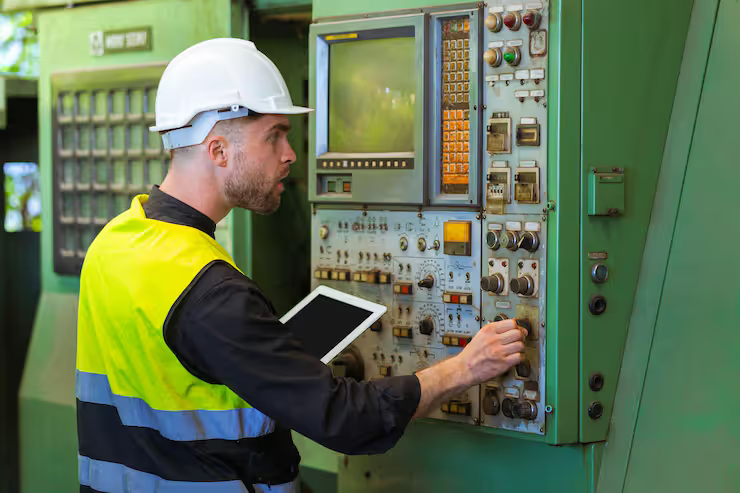
Control Panels
Control panels are designed to operate and monitor industrial machinery or processes. They can include switches, relays, contactors, controllers, indicators, and other control devices.
A control panel allows operators or automated systems to send commands to connected equipment while monitoring operating conditions.
Motor Control Panels
Motor control panels manage electrical motors used for pumps, fans, conveyors, compressors, mixers, and other machinery.
Depending on the application, a motor control configuration may include motor starters, overload protection, contactors, variable frequency drives, monitoring equipment, and control circuits.
Automation Panels
Automation panels integrate control hardware with industrial automation systems. A programmable logic controller, human-machine interface, communication modules, sensors, and other devices may be included.
These panels are particularly useful when production processes require automated sequencing, monitoring, data exchange, or coordinated equipment operation.
Instrumentation Panels
Instrumentation panels are primarily associated with measurement and process monitoring. They can accommodate instruments that measure variables such as pressure, temperature, flow, level, or other process parameters.
They are often found in process industries where continuous monitoring is important.
Main Components Inside an Industrial Panel
Although panel designs vary significantly, several components appear frequently.
Circuit breakers and protective devices help protect electrical circuits from conditions such as overloads and short circuits.
Contactors and relays are used to switch electrical loads and control equipment based on electrical signals.
Terminal blocks provide organized connection points for incoming and outgoing wiring.
Power supplies convert electrical power into suitable voltages for control electronics and automation equipment.
Programmable logic controllers (PLCs) process input signals and execute programmed instructions to control machinery and processes.
Variable frequency drives (VFDs) control motor speed and operating characteristics by adjusting the electrical supply delivered to a motor.
Human-machine interfaces (HMIs) provide a visual interface through which operators can monitor information and interact with control systems.
Meters and monitoring devices can display electrical or process information, helping operators understand system conditions.
The arrangement of these components should provide logical access, clear identification, suitable separation, and organized wiring.
How Industrial Panels Work
The basic operation depends on the panel's purpose. In a power distribution application, electrical power enters the panel and is divided among several protected circuits.
In a control application, signals from switches or sensors are received by control equipment. The controller processes those signals according to programmed logic and sends commands to connected devices.
For example, a manufacturing system may use sensors to detect the position of a product. The controller interprets the sensor signal and can then activate a motor, conveyor, valve, or other device.
In a more advanced automation system, the panel may also communicate with supervisory software or other controllers. This allows operators to monitor processes and respond to changing operating conditions.
Factors to Consider When Selecting an Industrial Panel
Choosing an appropriate panel requires more than looking at its physical size. The panel should be matched to the electrical, mechanical, environmental, and operational requirements of the application.
Electrical Requirements
Consider the incoming voltage, current capacity, number of circuits, connected loads, fault conditions, and control voltage requirements. These characteristics influence the types and ratings of components used inside the panel.
Environmental Conditions
The installation environment can have a major effect on panel design. Outdoor locations, dusty facilities, humid areas, high-temperature environments, and locations exposed to chemicals may require suitable enclosure protection and environmental controls.
Space and Component Layout
There should be adequate internal space for components, wiring, ventilation, maintenance access, and future modifications. A crowded panel can make troubleshooting and maintenance more difficult.
Automation Requirements
Determine whether the system requires basic electrical control or advanced automation. PLCs, HMIs, communication modules, drives, and remote monitoring equipment may be needed for more complex processes.
Safety and Standards
Industrial panels should be designed and installed according to applicable electrical safety requirements and relevant standards for the location and application. Proper grounding, circuit protection, labeling, wiring practices, and component selection are important parts of a safe installation.
Industrial Panel Applications
Industrial panels are used across many sectors because electrical control and power distribution are fundamental to automated operations.
Common applications include:
- Manufacturing and assembly lines
- Water and wastewater treatment
- Food and beverage processing
- Chemical processing
- Pharmaceutical production
- Oil and gas facilities
- Renewable energy systems
- HVAC and building infrastructure
- Material handling systems
- Pumping and motor control
- Packaging equipment
- Industrial machinery
The panel configuration changes according to the process. A motor-driven pumping station, for example, may require a different arrangement from an automated production line.
Maintenance and Inspection Basics
Regular inspection can help identify problems before they interrupt operations. Maintenance practices depend on the equipment and operating environment, but commonly include checking connections, inspecting wiring, examining protective devices, reviewing panel cleanliness, and monitoring signs of overheating or abnormal operation.
Operators should also look for unusual sounds, odors, discoloration, loose connections, damaged wiring, or unexpected changes in equipment behavior.
Before inspection or maintenance involving energized equipment, appropriate electrical safety procedures should be followed. Qualified personnel should handle tasks that require electrical testing, isolation, or access to hazardous electrical areas.
Keeping wiring diagrams, component identification, and maintenance records updated can also make troubleshooting more efficient.
Future Trends in Industrial Panels
Industrial panels are increasingly connected to broader automation and monitoring systems. Digital controllers, industrial communication networks, remote monitoring, energy measurement, and data collection are becoming more common.
Another important development is the growing integration of smart devices. Connected components can provide operational information that helps maintenance teams identify abnormal conditions and understand equipment performance.
Modular panel designs are also becoming valuable where systems need to accommodate changing production requirements. Better organization and digital documentation can simplify future modifications and troubleshooting.
Frequently Asked Questions
What is the main purpose of an industrial panel?
An industrial panel organizes electrical and control components in one structured system. Depending on its design, it can distribute power, protect circuits, control machinery, monitor processes, or support industrial automation.
What is the difference between a control panel and a distribution panel?
A distribution panel primarily distributes electrical power among multiple circuits, while a control panel focuses on controlling and monitoring equipment or industrial processes. Some systems combine both functions.
Why are PLCs used in industrial panels?
PLCs process signals from sensors and other devices and execute programmed instructions. They can control machinery and coordinate automated sequences with consistent logic.
What should be considered when selecting a panel enclosure?
Important considerations include environmental exposure, electrical requirements, physical dimensions, component arrangement, access requirements, heat management, and applicable safety standards.
How often should an industrial panel be inspected?
Inspection frequency depends on the equipment, operating environment, manufacturer guidance, applicable requirements, and operating conditions. Facilities with demanding environments may require more frequent checks.
Conclusion
Industrial panels provide the organized electrical and control foundation behind many modern industrial systems. From basic power distribution to sophisticated automated production processes, their configuration can vary considerably according to the application.
Understanding panel types, internal components, environmental requirements, safety considerations, automation needs, and maintenance practices provides a useful foundation for evaluating industrial control systems. A well-planned panel should not only meet current electrical and operational requirements but also provide logical organization and practical access for inspection, troubleshooting, and future system changes.