Material handling is an essential part of warehouses, manufacturing facilities, distribution centers, construction environments, and many other workplaces. It involves the movement, storage, protection, and control of materials as they travel through different stages of an operation.
Good material handling is not simply about moving products from one location to another. It involves choosing appropriate equipment, organizing storage areas, reducing unnecessary movement, protecting materials, and maintaining safe working conditions.
Understanding the fundamentals of material handling can help businesses and workers identify better ways to organize workflows, reduce physical effort, improve productivity, and minimize avoidable handling risks.
What Is Material Handling?
Material handling refers to the systematic movement and storage of goods, raw materials, components, finished products, tools, and other physical items within a facility or between connected operating areas.
A material handling system may include manual activities, mechanical equipment, automated technologies, storage systems, and information used to coordinate movement.
Common material handling activities include:
- Receiving incoming materials
- Unloading and transporting goods
- Moving items between production areas
- Storing raw materials and finished products
- Picking and sorting items
- Loading outbound shipments
- Managing inventory movement
- Handling packaging and containers
The objective is to move the right material to the right location at the appropriate time while maintaining safety, product quality, and operational efficiency.
Why Material Handling Knowledge Matters
Material movement can represent a significant part of day-to-day warehouse and industrial activity. Poorly planned movement can create unnecessary travel, congestion, product damage, inefficient storage, and workplace hazards.
Material handling knowledge helps organizations understand how different activities connect with one another.
For example, receiving should be coordinated with storage capacity, storage should support picking requirements, and picking should connect efficiently with packing and dispatch operations.
A well-planned approach can help achieve several objectives:
- Better use of available space
- More organized inventory movement
- Reduced unnecessary handling
- Improved workflow visibility
- Lower risk of material damage
- Safer working conditions
- More consistent operational performance
The most appropriate approach depends on the type of material, facility layout, volume, movement distance, weight, storage requirements, and frequency of handling.
Major Types of Material Handling Systems
Material handling systems are commonly divided into several categories based on how materials are moved and controlled.
Manual Material Handling
Manual handling involves people physically lifting, carrying, pushing, pulling, positioning, or transferring materials.
It remains common for smaller loads, short-distance movement, flexible tasks, and operations where automation may not be practical.
Proper lifting techniques, workstation design, load assessment, and employee training are important considerations when manual handling is required.
Mechanical Material Handling
Mechanical systems use equipment to move materials with less direct physical effort.
Examples include forklifts, pallet trucks, hoists, cranes, lifting tables, and industrial carts.
Mechanical equipment can be useful when materials are heavy, movement distances are longer, or repeated handling is required.
Automated Material Handling
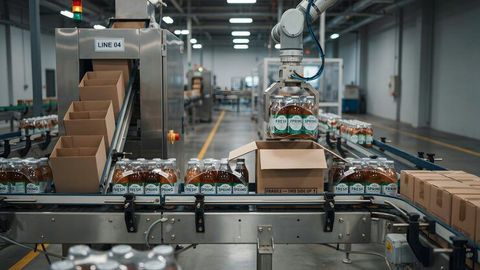
Automated material handling uses technologies such as conveyors, automated storage and retrieval systems, automated guided vehicles, autonomous mobile robots, sensors, and warehouse control software.
Automation can provide consistent movement and improve visibility across repetitive workflows. However, the system needs to be properly matched to the facility's layout, material characteristics, operating requirements, and maintenance capabilities.
Common Material Handling Equipment
Different equipment performs different functions, so equipment selection should be based on the actual handling requirement rather than simply choosing the most advanced technology.
Conveyors
Conveyors move materials along predetermined paths. They are frequently used in warehouses, manufacturing plants, distribution centers, and packaging operations.
Different conveyor designs can accommodate boxes, cartons, pallets, components, and other materials.
Forklifts
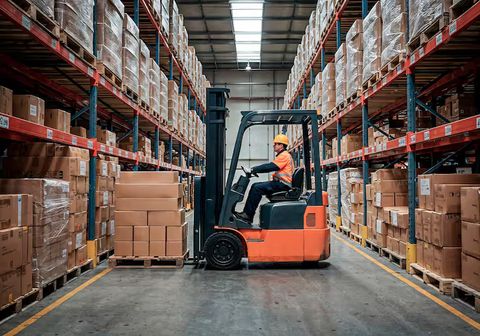
Forklifts are widely used for lifting and transporting palletized materials. Their suitability depends on factors such as load capacity, lifting height, operating environment, aisle width, and surface conditions.
Operators need appropriate training and must follow facility-specific safety procedures.
Cranes and Hoists
Cranes and hoists are designed for lifting and positioning heavy materials. They are commonly found in manufacturing, construction, maintenance, and industrial environments.
Load weight, lifting height, operating range, equipment condition, and surrounding hazards should be considered before use.
Pallet Trucks and Carts
Pallet trucks and industrial carts are useful for moving materials over relatively short distances. They can support flexible warehouse and production activities where larger equipment may not be necessary.
Storage and Retrieval Equipment
Racking systems, shelving, bins, containers, and automated storage systems help organize materials while making inventory easier to locate and retrieve.
The design should consider material dimensions, weight, turnover frequency, accessibility, and available floor or vertical space.
Material Handling Safety
Safety is one of the most important elements of material handling. Hazards can arise from lifting, falling objects, vehicle movement, unstable loads, poor storage, restricted visibility, and unsuitable equipment.
Important safety practices include maintaining clear travel paths, securing loads, following equipment operating procedures, inspecting equipment regularly, and keeping storage areas organized.
For manual handling, workers should assess the weight, size, shape, grip, and movement distance of a load before attempting to move it.
Facilities should also establish clear pedestrian and equipment traffic patterns where mobile equipment operates.
Safety procedures should be appropriate to the workplace and aligned with applicable occupational safety requirements.
How to Improve Material Handling Efficiency
Improving material handling does not always require introducing complex technology. Many improvements begin with understanding how materials currently move through a facility.
A useful evaluation can examine:
Material flow: Identify unnecessary movement, repeated handling, bottlenecks, and long travel paths.
Facility layout: Position frequently handled materials closer to the areas where they are needed.
Storage organization: Use logical labeling, location systems, and appropriate storage structures.
Load characteristics: Consider dimensions, weight, fragility, temperature requirements, and handling restrictions.
Equipment utilization: Review whether equipment is appropriate for the task and whether it is being used efficiently.
Workflow coordination: Connect receiving, storage, production, picking, packing, and dispatch activities so that each stage supports the next.
The Role of Technology in Modern Material Handling
Technology is changing how materials are tracked, transported, stored, and retrieved.
Warehouse management systems can provide information about inventory locations and movement. Barcode scanning and RFID can improve identification and tracking. Sensors can provide operational data, while automated equipment can support repetitive transportation tasks.
Robotics and autonomous mobile systems are also being introduced in some facilities to move materials between predefined locations.
However, technology should solve a clearly identified operational requirement. A technology-based system still requires appropriate facility planning, employee training, maintenance, safety procedures, and reliable data.
Choosing a Material Handling Approach
There is no single material handling system that works for every facility. A practical assessment should consider several factors.
Start with the material itself. Determine its weight, dimensions, fragility, shape, and handling requirements.
Next, evaluate the movement pattern. Consider how far materials travel, how frequently they move, and whether movement follows a predictable route.
The facility layout is equally important. Available floor space, ceiling height, aisle width, loading areas, storage locations, and production zones can influence equipment selection.
Finally, consider safety, maintenance, workforce requirements, future operational changes, and system integration.
Frequently Asked Questions
What is the main purpose of material handling?
The main purpose is to move, store, protect, and control materials efficiently and safely throughout an operational environment.
What are common examples of material handling equipment?
Common examples include conveyors, forklifts, pallet trucks, cranes, hoists, carts, shelving systems, racks, and automated handling equipment.
Is material handling only used in warehouses?
No. Material handling is also important in manufacturing plants, construction sites, distribution centers, retail operations, logistics facilities, and other industrial environments.
How does automation affect material handling?
Automation can support repetitive movement, improve tracking, provide consistent workflows, and reduce some forms of manual handling. Its effectiveness depends on proper system design and integration.
What should be considered when selecting handling equipment?
Important considerations include material weight and dimensions, movement distance, frequency, facility layout, storage requirements, operating environment, safety requirements, maintenance, and future needs.
Conclusion
Material handling is a broad discipline that connects storage, transportation, production, inventory, safety, and facility organization. Understanding its basic principles makes it easier to identify inefficient movement and develop more practical workflows.
The right approach depends on the materials being handled, the facility layout, movement patterns, workforce requirements, safety considerations, and operational objectives. Manual methods, mechanical equipment, and automated systems can all have a role when appropriately matched to the task.
As warehouses and industrial facilities become increasingly data-driven, material handling knowledge will continue to involve both fundamental physical processes and technologies such as tracking systems, automation, robotics, and intelligent warehouse management. A strong understanding of the fundamentals provides the foundation for evaluating these developments effectively.