Wood routers are among the most versatile tools used in woodworking. Whether creating decorative edges on furniture, cutting grooves for cabinets, carving signs, or making precise joinery, a wood router helps transform ordinary pieces of wood into detailed and functional products. It is widely used by professional carpenters, furniture manufacturers, cabinet makers, interior designers, and woodworking hobbyists because of its precision and flexibility.
As woodworking continues to evolve with modern tools and computer-assisted manufacturing, wood routers remain an essential part of workshops of all sizes. From handheld routers for home projects to CNC routers for industrial production, these machines support a wide range of woodworking applications while improving consistency and efficiency.
This guide explains what wood routers are, how they work, their different types, common applications, important features, maintenance practices, safety considerations, and recent developments shaping woodworking in 2026.
What Is a Wood Router?
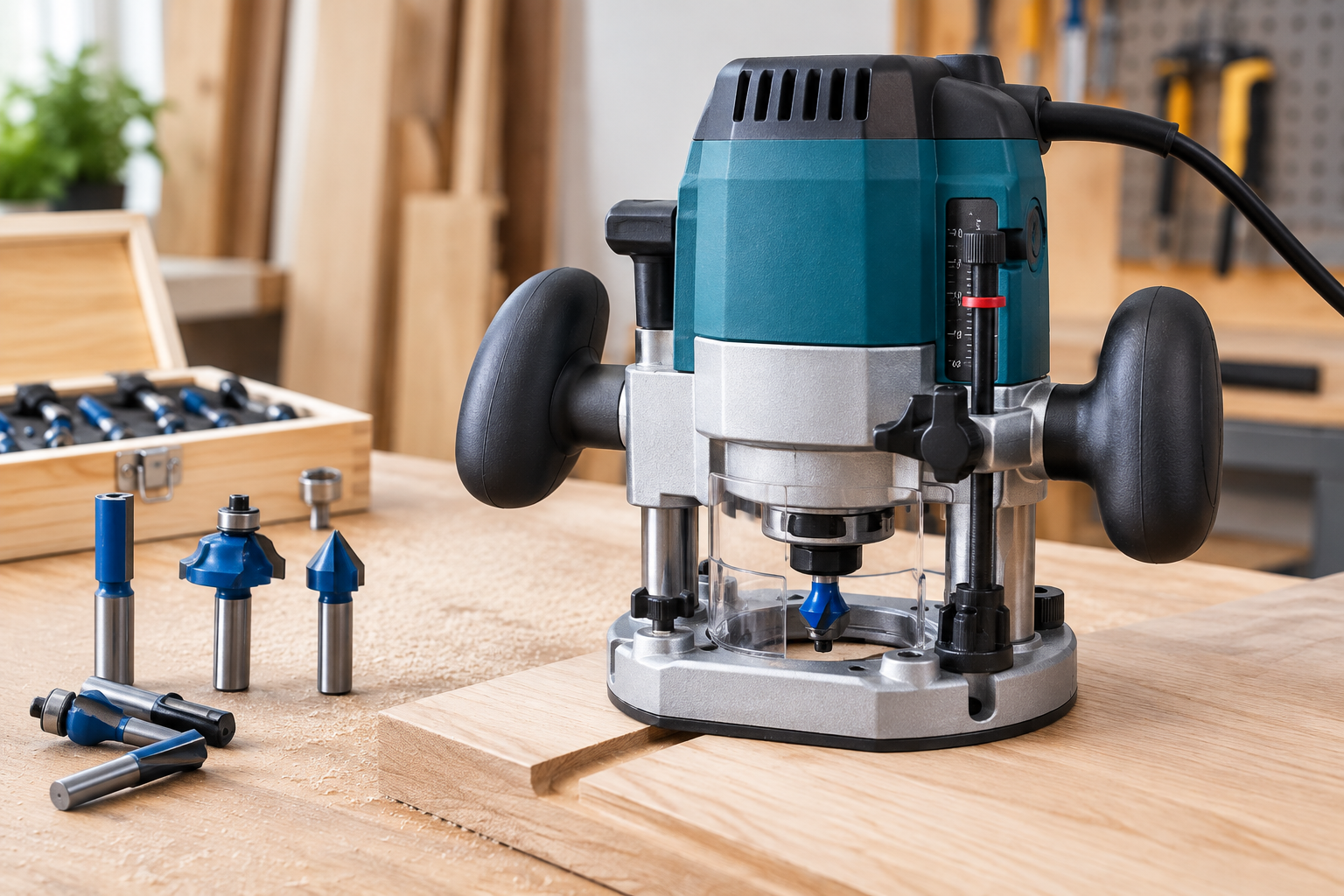
A wood router is a power tool designed to remove material from wood using a rotating cutting bit. The cutting bit spins at very high speed, allowing the tool to shape edges, hollow out areas, cut decorative profiles, create joints, and perform intricate carving work.
The router's motor rotates the cutting bit while the operator guides the machine across the wood surface or along a template. Different router bits create different cutting profiles, making the router one of the most adaptable tools in woodworking.
Wood routers work with many wood materials, including hardwood, softwood, plywood, MDF, particle board, laminate, veneer panels, and engineered wood products. Their versatility makes them useful for furniture making, cabinetry, flooring, doors, windows, decorative panels, and custom woodworking projects.
Why Wood Routers Are Important in Modern Woodworking
Modern woodworking requires both accuracy and creativity. A wood router allows users to produce smooth finishes, repeatable cuts, and decorative designs without relying entirely on manual tools.
The importance of wood routers has increased because furniture production now involves customized designs, modular construction, precision joinery, and detailed finishing. Routers make it easier to create consistent profiles across multiple workpieces while reducing manual effort.
They also help improve productivity by performing multiple woodworking operations with one machine. Instead of using separate tools for trimming, grooving, edge profiling, and carving, changing the router bit allows the same machine to perform different tasks.
In industrial workshops, CNC wood routers automate cutting and engraving processes, helping manufacturers produce large quantities with high precision and minimal waste.
How a Wood Router Works
A wood router operates using an electric motor connected to a spindle that holds a cutting bit. When powered on, the spindle rotates the bit at high speed. The rotating cutter removes wood as it moves across the material.
The depth of cut is adjusted before routing begins. The operator then guides the router along the workpiece using both hands, or the router follows a guide fence, template, or CNC programming depending on the machine type.
The cutting action depends on several factors, including spindle speed, feed direction, cutting depth, wood type, and router bit geometry. Proper setup produces smooth cuts with minimal splintering and accurate dimensions.
Different Types of Wood Routers
Wood routers are available in several designs depending on woodworking needs and project complexity.
Fixed Base Wood Router
A fixed base router has a stationary cutting depth. After setting the cutting depth, it remains constant throughout the operation. This type is commonly used for edge shaping, trimming laminate, decorative profiles, and template routing because it provides excellent stability and control.
Plunge Wood Router
A plunge router allows the cutting bit to move vertically into the wood during operation. The operator lowers the spinning bit into the workpiece and retracts it after completing the cut. This makes plunge routers suitable for grooves, mortises, recesses, inlays, and internal cutouts.
Trim Router
A trim router is smaller and lighter than standard routers. It is designed for precision trimming, edge finishing, laminate cutting, sign making, and smaller woodworking projects where maneuverability is important.
Router Table Setup
A router table mounts the router underneath a flat work surface while the cutting bit protrudes upward. Instead of moving the router, the operator moves the wood across the spinning bit. Router tables improve stability, repeatability, and control for small components and decorative edge work.
CNC Wood Router
Computer Numerical Control (CNC) wood routers automate woodworking through programmed cutting paths. They are widely used for cabinet manufacturing, furniture production, signage, artistic carving, and industrial woodworking applications requiring consistent results.
Common Router Bits and Their Functions
Router bits determine the type of cut a wood router performs. Each bit is designed for a specific woodworking operation.
Straight bits create grooves, dados, mortises, and recesses. Flush trim bits trim excess laminate or copy template shapes accurately. Round-over bits soften sharp edges by creating smooth curved profiles. Chamfer bits produce angled edges for decorative finishing. Cove bits cut concave decorative edges commonly found on furniture. Rabbeting bits create shoulder joints for cabinets and frames. V-groove bits carve decorative patterns, lettering, and sign designs.
Choosing the correct router bit improves surface quality, reduces tear-out, and produces cleaner woodworking results.
Applications of Wood Routers
Wood routers are used across residential, commercial, and industrial woodworking industries because they perform many shaping and cutting tasks with precision.
Application Area | How Wood Routers Are Used |
| Furniture Manufacturing | Edge profiles, joinery, decorative carving, grooves, and panel shaping. |
| Cabinet Making | Cutting slots, hinge recesses, shelf grooves, and door profiles. |
| Interior Decoration | Wall panels, moldings, trims, decorative wood patterns, and ceiling elements. |
| Doors and Windows | Frame joints, edge shaping, grooves, and decorative designs. |
| Sign Making | Engraving letters, logos, artistic carving, and customized wooden signs. |
| DIY Woodworking | Shelves, tables, picture frames, cutting boards, and home improvement projects. |
Because router bits are interchangeable, one router supports dozens of woodworking operations across these applications.
Materials Compatible with Wood Routers
Wood routers work with many materials beyond natural wood. Their compatibility depends on selecting the correct router bit and cutting speed.
Hardwoods such as oak, maple, walnut, teak, and ash are commonly routed for furniture and flooring. Softwoods including pine, cedar, spruce, and fir are suitable for construction and decorative woodworking. Engineered materials like plywood, MDF, HDF, particle board, and laminate panels are frequently routed for cabinets and modular furniture.
Some specialized router bits also cut acrylic sheets, composite panels, plastic laminates, and certain soft composite materials used in interior design projects.
Key Features to Consider in a Wood Router
Several features influence router performance, precision, and usability.
Motor power affects cutting capacity and the ability to handle hardwood materials. Variable speed control allows adjustment based on material type and router bit diameter. Depth adjustment mechanisms help achieve accurate cutting depths for grooves and joinery.
Soft-start technology reduces sudden motor movement during startup, improving control. Dust extraction ports connect to vacuum systems, keeping workspaces cleaner and improving visibility. Ergonomic handles provide better grip and reduce operator fatigue during extended woodworking sessions.
Collet size determines compatibility with different router bit shank diameters, making it important to select a router that supports commonly used bits.
Benefits of Using a Wood Router
Wood routers improve woodworking quality by producing clean edges, accurate joints, and decorative finishes that are difficult to achieve consistently with hand tools.
Their versatility allows one machine to perform trimming, grooving, shaping, engraving, carving, and edge profiling with different router bits. Precision depth control helps maintain uniform cuts across multiple workpieces, which is especially important in cabinet making and furniture production.
Routers also increase efficiency by reducing manual labor while maintaining repeatable results. They support both creative woodworking and production-oriented manufacturing, making them valuable for beginners and professionals alike.
Safety Practices When Operating a Wood Router
Wood routers operate at very high spindle speeds, making safety an important part of woodworking.
Operators should secure the workpiece before routing to prevent movement during cutting. Appropriate router bits should be tightened correctly before starting the motor. Eye protection, hearing protection, and dust masks help reduce exposure to wood chips, noise, and fine dust.
Routing should follow the correct feed direction to maintain control and reduce kickback. Deep cuts should be completed gradually through multiple passes instead of removing excessive material at once. Keeping both hands on the router improves stability during operation.
Disconnecting power before changing router bits or performing maintenance reduces the risk of accidental startup.
Maintenance of Wood Routers
Routine maintenance helps maintain cutting accuracy, extend tool life, and reduce unexpected failures.
Router bits should be cleaned regularly to remove resin and wood buildup that affects cutting performance. Worn or damaged bits should be replaced because dull cutters increase heat generation and produce rough finishes.
Dust accumulation around the motor housing and ventilation openings should be removed periodically to maintain cooling efficiency. Bearings, collets, guide mechanisms, and plunge springs should be inspected for wear and cleaned according to manufacturer recommendations.
Power cords, switches, and moving components should also be checked regularly to ensure safe operation and reliable performance.
Recent Trends in Wood Routers During 2025–2026
Woodworking technology has continued to evolve over the past year, making routers more precise, efficient, and user-friendly.
Cordless brushless routers have become increasingly popular because they provide greater mobility without sacrificing performance for light and medium woodworking tasks. Improved battery technology allows longer operating times for job-site work.
CNC wood routers have become more accessible for small workshops, enabling customized furniture production, engraving, and panel cutting with digital design software. Integration with CAD and CAM software has simplified production workflows.
Manufacturers have also introduced enhanced dust collection systems, electronic speed stabilization, improved LED work lights, and more accurate micro-adjustment mechanisms to improve visibility and precision during routing.
Growing interest in customized furniture, modular interiors, and home woodworking projects has also increased demand for compact routers suitable for workshops and hobbyists.
Choosing the Right Wood Router for Different Projects
Selecting a wood router depends on the type of woodworking project, material thickness, frequency of use, and desired level of precision.
Small decorative projects often benefit from compact trim routers because they are lightweight and easier to control. Furniture making and cabinetry generally require plunge or fixed base routers with adjustable depth settings and higher motor capacity.
Workshops producing repeated designs or large panels often choose router tables or CNC routers for improved consistency and production efficiency. Matching router size, motor capacity, and compatible router bits with the intended application helps achieve cleaner cuts and better long-term performance.
Understanding project requirements before selecting a router also improves safety, productivity, and overall woodworking quality.
The Future of Wood Routers in Woodworking
Wood routers continue to play a central role in both traditional craftsmanship and advanced woodworking manufacturing. As digital fabrication becomes more common, routers are increasingly integrated with design software, automated cutting systems, and precision manufacturing equipment.
Future developments are expected to focus on smarter speed control, better dust management, quieter motors, enhanced cordless performance, and improved CNC automation for customized production. Sustainable woodworking practices are also encouraging routers that generate less material waste through optimized cutting paths.
Despite advances in automation, handheld wood routers remain valuable because they combine precision, creativity, and flexibility for countless woodworking tasks.
Conclusion
Wood routers are versatile woodworking tools that support shaping, carving, trimming, grooving, joinery, and decorative finishing across a wide range of projects. From simple DIY furniture to industrial cabinet manufacturing, routers provide the accuracy and flexibility needed for modern woodworking.
Understanding the different types of routers, selecting the appropriate router bits, following safe operating practices, and maintaining the tool properly all contribute to better woodworking results and longer equipment life. As woodworking technology continues to advance through cordless tools and CNC automation, wood routers remain an essential solution for creating precise, durable, and visually appealing wood products in workshops of every size.