Packaging plays an important role in protecting products, maintaining quality, supporting transportation, and presenting information to customers. As production processes become more organized and product ranges become more diverse, packaging machinery helps businesses handle repetitive packaging tasks with greater consistency.
Packaging machinery includes equipment used for filling, sealing, wrapping, labeling, coding, forming, inspecting, and handling packaged products. The appropriate equipment depends on the product, package format, production environment, material, and required level of automation.
This guide explains the main categories of packaging machinery, how they work, where they are used, and what factors should be considered when evaluating a packaging system.
What Is Packaging Machinery?
Packaging machinery refers to mechanical, electrical, pneumatic, or automated equipment designed to perform one or more packaging operations.
A packaging line may contain a single machine or several connected machines. For example, a production process could involve product filling, container sealing, label application, date coding, inspection, and case packing.
Modern packaging systems can range from relatively simple machines requiring operator involvement to highly automated lines controlled through sensors, programmable logic controllers, and human-machine interfaces.
The main objectives are generally to improve consistency, reduce repetitive manual handling, maintain packaging accuracy, and coordinate different stages of production.
Main Types of Packaging Machinery
Different products require different packaging processes. Understanding the major machine categories makes it easier to identify the equipment relevant to a particular application.
Filling Machines
Filling machines place a specified quantity or volume of product into containers. They are commonly used for liquids, powders, granules, pastes, and other materials.
Different filling mechanisms are designed for different product characteristics. Liquid products may use volumetric or flow-based systems, while powders and granular products can require auger, gravity, or weighing mechanisms.
Filling accuracy is particularly important because inconsistent quantities can affect product quality, packaging appearance, and material usage.
Form-Fill-Seal Machines
Form-fill-seal equipment combines multiple packaging operations into one process. Depending on the configuration, the machine can form packaging material, introduce the product, and seal the finished package.
These systems are frequently used with flexible packaging materials. Their integrated design can help reduce the number of separate production stages while maintaining a continuous workflow.
Sealing Machines
Sealing equipment closes containers or packages after the product has been introduced. Heat sealing, induction sealing, ultrasonic sealing, and mechanical sealing are examples of technologies used in different applications.
The appropriate sealing method depends on the packaging material, container design, product characteristics, and required seal properties.
Wrapping Machines
Wrapping machines apply flexible material around products or groups of products. Stretch wrapping, shrink wrapping, and flow wrapping are common approaches.
Wrapping can help protect products during handling and transportation while also keeping multiple items together. The correct wrapping method depends on product dimensions, material characteristics, and packaging requirements.
Labeling Machines
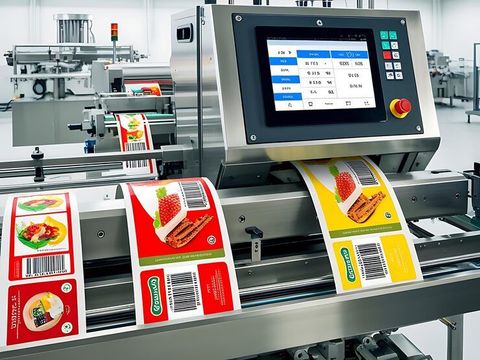
Labeling machinery applies labels to containers, packages, cartons, or other surfaces. Some systems are designed for a specific container shape, while others accommodate several formats.
Labeling accuracy matters because labels often contain important product information, identification details, regulatory information, or tracking data.
Cartoning and Case Packing Machines
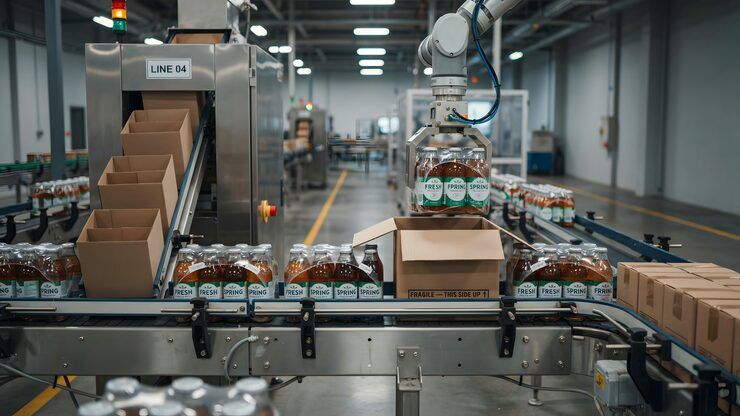
Cartoning machines place products into cartons, while case packing equipment organizes packaged products into larger shipping cases.
These machines are often integrated into larger production lines. Automated carton handling can reduce repetitive manual activities and create a more consistent packaging sequence.
Coding and Marking Equipment
Coding systems add information such as production dates, batch identifiers, lot numbers, or other required markings to packaging.
Depending on the application, technologies may include inkjet printing, thermal transfer, laser marking, or other coding methods. The choice depends on the packaging surface, required print characteristics, production conditions, and information being applied.
How Does a Packaging Line Work?
A packaging line normally follows a sequence of coordinated operations.
First, products are transferred into the packaging area. A filling or dosing system places the product into the selected package. The container or package is then closed or sealed.
Additional equipment may apply labels, print identification information, inspect the package, and organize products into cartons or cases.
Sensors and control systems can coordinate these stages. If a machine detects an incorrectly positioned container or another process issue, the control system may stop the relevant operation or direct the affected package away from the normal production flow.
The exact sequence varies significantly according to the product and packaging format.
Applications Across Different Industries
Packaging machinery is used across many industries because products have different protection, handling, and identification requirements.
Food and beverages: Filling, sealing, wrapping, labeling, and inspection equipment are widely used for packaged foods and drinks.
Pharmaceuticals: Packaging systems may support controlled filling, container handling, labeling, inspection, and traceability requirements.
Cosmetics and personal care: Bottles, tubes, jars, cartons, and flexible packages can require specialized filling and closing processes.
Chemicals: Packaging equipment may handle liquids, powders, granules, and other materials in containers designed for their specific properties.
Consumer products: Household products and general merchandise can use equipment for wrapping, cartoning, labeling, and case packing.
Because each industry has different requirements, packaging machinery should be evaluated according to the actual product and operating environment rather than simply by machine category.
Key Factors When Choosing Packaging Machinery
Selecting packaging equipment involves more than identifying the basic packaging operation. Several technical and operational factors should be considered.
Product Characteristics
Consider whether the product is liquid, powder, granular, solid, fragile, sticky, or temperature-sensitive. Product characteristics influence filling technology, handling methods, and cleaning requirements.
Packaging Material and Format
The machine must be compatible with the intended package. Important factors include container dimensions, flexible film characteristics, carton specifications, closure type, and package shape.
Production Requirements
Expected production volume and operating schedule influence the appropriate machine configuration. Equipment should be capable of handling the required workflow without creating unnecessary complexity.
Accuracy and Consistency
Filling, sealing, labeling, and coding operations should produce consistent results. Measurement systems, sensors, and machine controls can contribute to process stability.
Changeover Requirements
Businesses handling multiple products or package formats should consider how easily equipment can be adjusted between production runs. Straightforward changeovers can help reduce interruptions.
Maintenance and Cleaning
Routine maintenance is important for reliable operation. Equipment should provide practical access to components that require inspection, cleaning, lubrication, adjustment, or replacement.
Safety and Compliance
Packaging equipment should incorporate appropriate guarding, emergency controls, electrical protection, and operating procedures. The relevant industry and workplace requirements should be considered before implementation.
Automation in Packaging Machinery
Automation has become an important part of modern packaging systems. Sensors, programmable controllers, robotic handling systems, machine vision, and data collection technologies can coordinate packaging operations.
Automated inspection systems, for example, can check package position, labels, seals, codes, or other characteristics. Robotic systems can assist with product handling, palletizing, and case packing.
However, automation should be matched to the actual production requirement. A highly complex system is not automatically appropriate for every operation. Equipment selection should consider the required process, operator interaction, maintenance capabilities, and future operational needs.
Common Challenges in Packaging Operations
Packaging processes can experience problems such as inconsistent filling, poor seals, damaged packaging materials, inaccurate labels, coding errors, or frequent machine stoppages.
Many issues can be related to incorrect machine settings, unsuitable packaging materials, inadequate maintenance, product variation, or improper alignment.
A structured approach to troubleshooting can help identify whether the issue originates with the product, packaging material, machine configuration, or surrounding production process.
Regular inspections and documented operating procedures can also help identify recurring problems before they significantly disrupt production.
Future Trends in Packaging Machinery
Packaging machinery is increasingly incorporating connected controls, machine vision, robotics, improved sensors, and data-based monitoring.
Flexible production is another important trend as manufacturers manage wider product ranges and changing package formats. Equipment designed for easier adjustments can support these requirements.
Energy efficiency and material optimization are also receiving greater attention. Packaging systems are being evaluated not only for production performance but also for how effectively they use materials, energy, and operating resources.
Frequently Asked Questions
What is packaging machinery used for?
Packaging machinery performs tasks such as filling, sealing, wrapping, labeling, coding, inspection, cartoning, and case packing.
What are the main types of packaging machines?
Common categories include filling machines, sealing machines, form-fill-seal machines, wrapping machines, labeling machines, cartoning machines, case packers, and coding systems.
How do I determine which packaging machine is suitable?
Start with the product characteristics, package format, packaging material, required production workflow, accuracy requirements, changeover needs, and operating environment.
Can packaging machinery be automated?
Yes. Packaging systems can use sensors, programmable controls, machine vision, robotics, and other technologies to automate individual operations or coordinate an entire packaging line.
Why is maintenance important for packaging equipment?
Regular maintenance helps identify wear, contamination, alignment problems, and other issues that can affect packaging consistency and machine operation.
Conclusion
Packaging machinery brings together a range of technologies designed to make packaging operations more consistent, organized, and manageable. From filling and sealing to labeling, inspection, cartoning, and case packing, each machine performs a specific role within the overall packaging process.
The right approach is to begin with the product and packaging requirements rather than choosing equipment based only on machine type or automation level. Understanding product characteristics, packaging materials, production needs, maintenance requirements, safety considerations, and future flexibility can make the evaluation process more practical.
As packaging systems continue to adopt automation, sensors, robotics, and data-driven controls, understanding the fundamentals remains important. A clear assessment of the complete packaging workflow provides a stronger foundation for selecting and operating equipment effectively.