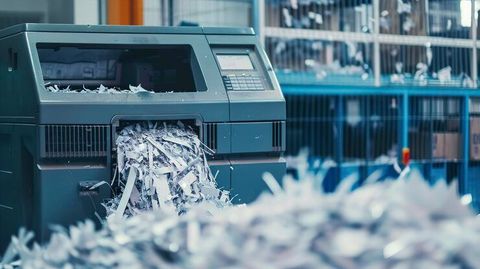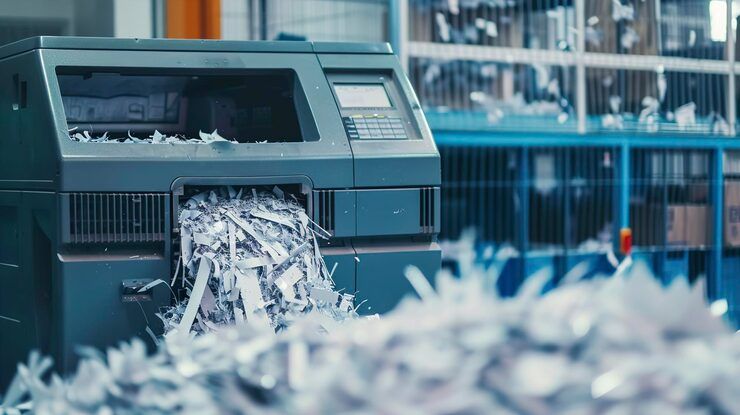
Paper cutting machines are essential tools used across printing, packaging, publishing, stationery, and manufacturing industries. They are designed to cut paper into precise sizes, shapes, and formats with consistency and accuracy. From producing books and notebooks to packaging materials, greeting cards, brochures, and labels, these machines help businesses achieve clean cuts while improving production efficiency.
As industries continue moving toward automation and precision manufacturing, paper cutting machines have evolved significantly. Modern systems now combine mechanical engineering with digital controls, allowing operators to perform accurate cuts with minimal waste and greater productivity. Whether used in a small print shop or a large industrial production facility, paper cutting machines play an important role in delivering high-quality finished products.
This guide explains what paper cutting machines are, how they work, their major types, applications, advantages, maintenance practices, and recent developments shaping the industry.
What Is a Paper Cutting Machine?
A paper cutting machine is a specialized machine designed to cut stacks or sheets of paper into required dimensions. Unlike manual cutting tools, these machines use sharp blades and controlled pressure to produce accurate and uniform cuts across multiple sheets simultaneously.
Paper cutting machines are available in various sizes and configurations depending on production requirements. Some machines are manually operated for small-scale work, while others are fully automated and controlled through computerized systems for industrial production.
The primary objective of a paper cutting machine is to improve cutting accuracy, reduce material waste, increase productivity, and maintain consistent quality throughout the production process.
Why Paper Cutting Machines Are Important Today
The demand for customized printed products, packaging materials, educational supplies, and commercial printing has increased the need for reliable cutting equipment. Businesses require machines capable of handling different paper thicknesses, textures, and sizes without compromising precision.
Paper cutting machines help manufacturers maintain consistent dimensions, which is especially important in packaging and printing where even small variations can affect product quality. Automated cutting also reduces manual effort and improves workplace efficiency by completing repetitive tasks quickly.
In today's manufacturing environment, precision and speed are equally important. Paper cutting machines support both requirements while helping businesses minimize production errors and optimize material utilization.
How Paper Cutting Machines Work
The working principle of a paper cutting machine is based on applying controlled force through a sharp cutting blade to separate paper into desired dimensions. Although designs vary, most machines follow a similar operating sequence.
First, paper sheets are aligned carefully against adjustable guides or back gauges. These positioning systems ensure that every sheet remains in the correct location before cutting begins. Once aligned, a clamp securely holds the paper stack to prevent movement during the cutting process.
The cutting blade then moves downward through the paper stack using hydraulic, mechanical, pneumatic, or electric power depending on the machine type. After completing the cut, the blade returns to its original position, and the finished sheets are removed while the next stack is prepared.
Modern machines often include programmable settings that allow operators to save cutting patterns for repeated jobs, improving consistency and reducing setup time.
Types of Paper Cutting Machines
Paper cutting machines are designed for different production volumes, materials, and precision requirements. Selecting the appropriate type depends on the nature of the application.
Manual Paper Cutting Machines
Manual paper cutting machines are commonly used in offices, schools, copy centers, and small printing businesses. These machines use a hand-operated lever or guillotine blade to cut individual sheets or small stacks of paper. They are simple to operate and suitable for low-volume production.
Electric Paper Cutting Machines
Electric paper cutters use electric motors to power the cutting mechanism. They reduce manual effort and provide greater cutting consistency than manual machines. These machines are suitable for medium-sized printing operations where frequent cutting is required.
Hydraulic Paper Cutting Machines
Hydraulic machines generate cutting force through hydraulic systems, making them ideal for cutting thick stacks of paper with high precision. They are widely used in commercial printing presses, packaging facilities, and industrial paper processing plants.
Programmable Paper Cutting Machines
Programmable paper cutting machines feature digital control panels that allow operators to enter cutting measurements and store multiple cutting programs. These machines improve repeatability, reduce setup errors, and increase production speed for complex jobs.
Automatic Paper Cutting Machines
Automatic paper cutting machines integrate feeding, positioning, clamping, and cutting into one continuous process. They are designed for high-volume manufacturing environments where productivity and accuracy are critical.
Components of a Paper Cutting Machine
A paper cutting machine consists of several important components working together to achieve precise cuts. The cutting blade is the primary component responsible for slicing paper cleanly. The back gauge positions paper accurately according to selected measurements, while the clamping mechanism holds the paper stack firmly during cutting.
The machine frame provides structural stability, reducing vibration during operation. Control panels allow operators to input measurements and control cutting functions in automated models. Safety systems such as blade guards, emergency stop buttons, and sensors help reduce operational risks and improve workplace safety.
Each component contributes to the overall accuracy, efficiency, and reliability of the cutting process.
Applications of Paper Cutting Machines
Paper cutting machines are used in numerous industries where accurate paper processing is required. Commercial printing companies use them to trim brochures, catalogs, business cards, magazines, and promotional materials to precise dimensions.
The publishing industry relies on paper cutting machines during book production for trimming pages before binding and finishing. Packaging manufacturers use these machines to cut cartons, labels, inserts, folding boxes, and packaging sheets.
Educational institutions and stationery manufacturers use paper cutting machines to produce notebooks, examination papers, exercise books, calendars, folders, and office supplies. Advertising companies use them for posters, flyers, banners, and marketing materials.
Creative industries such as greeting card production, invitation printing, craft manufacturing, and paper decoration also depend on precise cutting equipment for high-quality finishing.
Benefits of Using Paper Cutting Machines
Paper cutting machines provide several operational advantages across different production environments. One of the biggest benefits is precision. These machines produce accurate cuts repeatedly, ensuring consistent dimensions throughout production.
Another major advantage is productivity. Large stacks of paper can be cut in a single operation, significantly reducing processing time compared to manual methods. This helps businesses handle higher production volumes efficiently.
Material optimization is another important benefit. Accurate cutting reduces paper wastage and helps maximize the use of raw materials, supporting cost-efficient manufacturing practices.
Paper cutting machines also improve workflow consistency by reducing human error and maintaining uniform output across multiple production batches. Automated machines further simplify repetitive cutting jobs through programmable settings and memory functions.
Choosing the Right Paper Cutting Machine
Selecting a paper cutting machine depends on production requirements, paper type, cutting size, and operational workload. Businesses with low production volumes may benefit from manual or electric machines, while industrial manufacturers often require hydraulic or automated models.
Cutting capacity is an important consideration because machines are designed to handle different stack thicknesses. Businesses should also evaluate maximum paper size compatibility, cutting accuracy, automation features, and ease of operation.
Safety features should be included when selecting equipment, especially in commercial production environments. Machines with protective guards, two-hand operation systems, and emergency controls contribute to safer daily operations.
Future production growth should also be considered so the selected machine can support increasing workloads without requiring frequent equipment replacement.
Maintenance of Paper Cutting Machines
Proper maintenance helps extend machine lifespan, maintain cutting accuracy, and reduce unexpected downtime. Routine cleaning removes paper dust and debris that can accumulate around blades and moving components.
Blade inspection is essential because dull blades can produce rough edges and uneven cuts. Regular sharpening or replacement helps maintain cutting quality. Lubricating moving parts reduces friction and supports smooth mechanical operation.
Operators should periodically check clamps, alignment guides, hydraulic systems, electrical connections, and digital controls to ensure proper performance. Calibration should also be performed regularly so cutting measurements remain accurate over time.
Preventive maintenance schedules help identify wear before it affects production quality or machine reliability.
Common Challenges During Paper Cutting
Although paper cutting machines are designed for precision, certain operational issues can affect performance if not addressed properly. Misaligned paper stacks can lead to uneven cuts, while worn blades may produce rough or incomplete edges.
Incorrect clamp pressure can allow paper movement during cutting, affecting dimensional accuracy. Dust buildup inside mechanical systems may reduce operational efficiency if cleaning is neglected.
Programming errors in automated machines can also result in incorrect cutting sequences. Regular calibration, proper operator training, and routine maintenance help minimize these challenges and improve long-term performance.
Safety Practices When Operating Paper Cutting Machines
Safe operation is an important part of using paper cutting machines in any workplace. Operators should receive proper training before using industrial cutting equipment. Hands should always remain outside designated cutting areas during machine operation.
Safety guards and protective mechanisms should never be removed or bypassed. Emergency stop buttons should remain accessible at all times in case immediate shutdown is required.
Routine inspection before operation helps identify loose components, damaged blades, or mechanical issues that could affect safety. Maintaining an organized work area also reduces the risk of accidents during paper handling and machine operation.
Recent Trends in Paper Cutting Machines in 2026
Paper cutting technology continues evolving with greater emphasis on automation, precision, sustainability, and digital manufacturing. Manufacturers are introducing intelligent cutting systems capable of storing hundreds of cutting programs and automatically adjusting cutting positions.
Servo-driven cutting mechanisms are becoming more common because they improve positioning accuracy while reducing energy consumption. Touchscreen interfaces have simplified machine programming, making equipment easier for operators to manage.
Many modern paper cutting machines now include sensors that monitor blade position, clamp pressure, and operational safety in real time. These systems help improve production consistency while reducing manual intervention.
Sustainability is another important trend. New machine designs focus on reducing paper waste through optimized cutting layouts and improved measurement accuracy. Energy-efficient motors and hydraulic systems also contribute to lower operational energy consumption.
As printing and packaging industries continue adopting smart manufacturing practices, paper cutting machines are increasingly integrated into automated production lines for faster and more efficient workflow management.
Future of Paper Cutting Machines
The future of paper cutting machines is closely connected to Industry 4.0 and intelligent manufacturing. Automated production environments are expected to rely more heavily on digitally connected cutting equipment capable of communicating with printing, packaging, and finishing systems.
Artificial intelligence and machine learning may further improve cutting optimization by automatically selecting efficient cutting layouts based on paper size and production requirements. Predictive maintenance systems could help identify blade wear and mechanical issues before they interrupt production.
Cloud-based production monitoring and remote diagnostics are also becoming more common, allowing manufacturers to monitor equipment performance across multiple production facilities.
These advancements are expected to improve productivity, reduce waste, enhance operational accuracy, and support sustainable manufacturing practices across the paper processing industry.
Conclusion
Paper cutting machines are fundamental tools in modern printing, publishing, packaging, stationery, and manufacturing industries. Their ability to deliver accurate, consistent, and efficient cuts makes them an essential part of paper processing operations ranging from small businesses to large industrial production facilities.
Understanding the different types of paper cutting machines, their working process, applications, maintenance requirements, and safety practices helps businesses choose suitable equipment for their production needs. Modern automation, digital controls, and precision engineering have transformed these machines into highly reliable systems capable of supporting growing production demands while reducing material waste.
As technology continues advancing in 2026 and beyond, paper cutting machines will become even more intelligent, energy-efficient, and integrated with automated manufacturing systems, making them an increasingly valuable component of efficient paper production workflows.