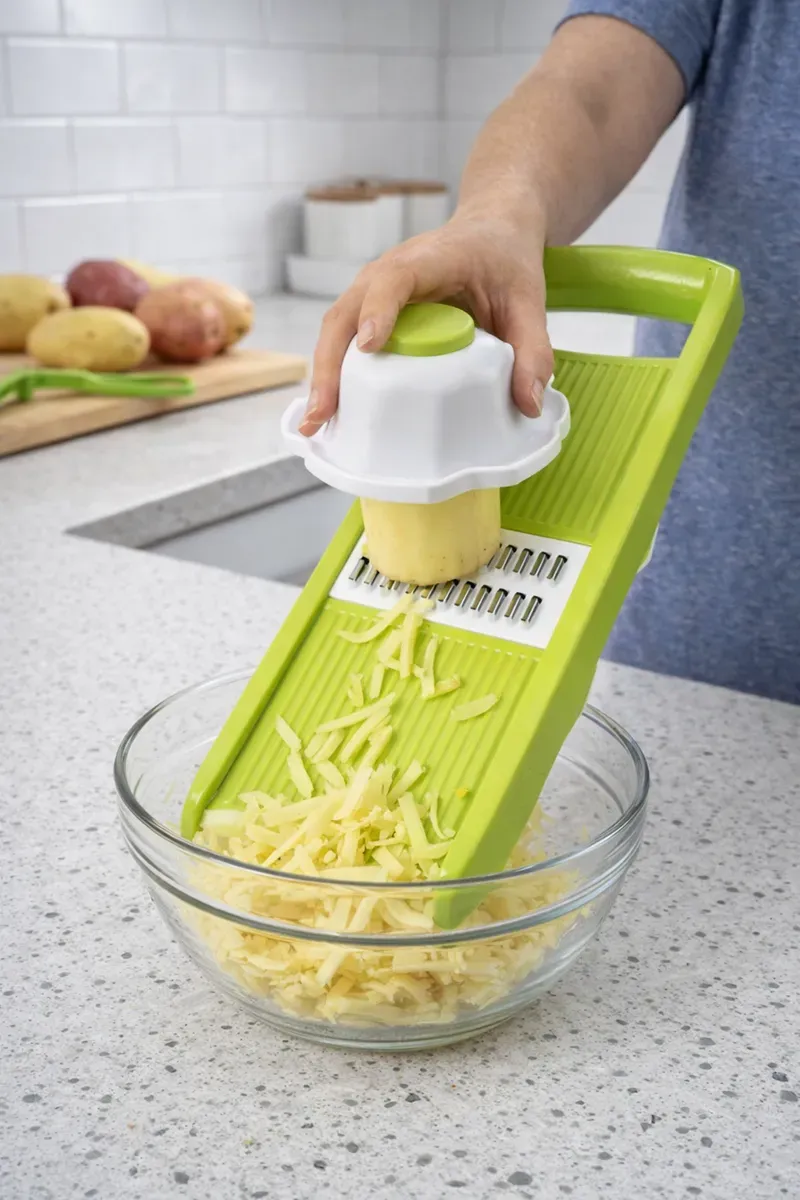
Vegetable cutting machines have become an important part of modern food preparation in homes, restaurants, catering businesses, food processing units, and commercial kitchens. As food demand continues to grow, preparing vegetables quickly while maintaining consistent quality has become essential. These machines help reduce manual effort, improve efficiency, and produce uniform cuts that are difficult to achieve by hand.
From slicing onions and tomatoes to dicing carrots, shredding cabbage, and cutting potatoes into fries, vegetable cutting machines are designed to perform a wide range of tasks. They are available in different sizes and capacities, making them suitable for both small-scale and industrial-scale operations.
This guide explains how vegetable cutting machines work, the different types available, where they are used, their benefits, maintenance practices, safety considerations, and the latest trends shaping the industry in 2026.
What Is a Vegetable Cutting Machine?
A vegetable cutting machine is a mechanical or electrically powered device that cuts vegetables into specific shapes and sizes. Instead of relying on manual knives, the machine uses rotating blades, cutting discs, or specialized mechanisms to process vegetables quickly and consistently.
The primary purpose of these machines is to save time while ensuring that vegetables have a uniform appearance. Uniform cutting is important not only for presentation but also for even cooking and food quality.
Vegetable cutting machines can process a variety of vegetables, including potatoes, onions, cucumbers, carrots, cabbage, lettuce, tomatoes, pumpkins, beans, peppers, and many leafy vegetables. Some advanced models can also handle fruits, making them versatile food preparation equipment.
Why Vegetable Cutting Machines Are Important Today
Food preparation has become increasingly time-sensitive across restaurants, cloud kitchens, hotels, institutional cafeterias, supermarkets, and packaged food industries. Preparing large quantities of vegetables manually requires significant labor and increases the possibility of inconsistent cuts and food waste.
Vegetable cutting machines help solve these challenges by increasing productivity and reducing preparation time. They also support better hygiene because vegetables are handled less during the cutting process. Businesses that prepare hundreds of meals every day benefit from faster workflows and more predictable food quality.
In households, compact vegetable cutting machines simplify daily cooking, especially for families preparing multiple dishes. They also reduce the physical effort involved in repetitive chopping tasks.
As automation continues to expand in the food industry, vegetable cutting machines play an important role in improving operational efficiency while maintaining food safety and consistency.
How Vegetable Cutting Machines Work
Vegetable cutting machines follow a straightforward working principle. Vegetables are placed into a feeding chamber or hopper, where they move toward rotating blades or cutting discs. The cutting mechanism slices, dices, shreds, juliennes, or cubes the vegetables according to the selected attachment.
The size and shape of the cut depend on the blade configuration. Many machines include interchangeable cutting discs that allow users to switch between slicing, grating, shredding, or cubing without replacing the entire machine.
Electric motors drive the cutting mechanism in most commercial models, while manual versions rely on hand-operated levers or rotating handles. Once processed, vegetables are collected in an output tray or container, ready for cooking or packaging.
Modern machines are designed to minimize waste while maintaining smooth and continuous operation during food preparation.
Types of Vegetable Cutting Machines
Vegetable cutting machines come in several designs depending on the intended application, production volume, and cutting style.
Manual Vegetable Cutting Machines
Manual machines are operated without electricity and are commonly used in homes or small kitchens. They use mechanical pressure or rotating handles to cut vegetables into slices, cubes, or strips. These machines are compact, lightweight, and suitable for everyday food preparation.
Electric Vegetable Cutting Machines
Electric models use motors to automate the cutting process. They can process larger quantities of vegetables much faster than manual versions and are commonly used in restaurants, hotels, cafeterias, and commercial kitchens.
Multi-Function Vegetable Cutting Machines
These machines support multiple cutting styles using interchangeable blades. A single machine can perform slicing, shredding, dicing, julienne cutting, grating, and cubing, making it suitable for kitchens with diverse food preparation needs.
Industrial Vegetable Cutting Machines
Industrial machines are built for continuous operation in food processing plants and large production facilities. They are designed to process high volumes of vegetables while maintaining consistent size and minimal waste. Many models integrate directly into automated food production lines.
Specialized Vegetable Cutting Machines
Certain machines are designed for specific vegetables or cutting styles, such as potato chip slicers, french fry cutters, cabbage shredders, onion slicers, leafy vegetable cutters, or root vegetable cube cutters. These machines improve efficiency for repetitive, specialized tasks.
Common Cutting Styles Produced by These Machines
Vegetable cutting machines can create different shapes depending on cooking or packaging requirements.
Slicing is widely used for cucumbers, tomatoes, onions, potatoes, and zucchini. Dicing produces evenly sized cubes for salads, soups, and frozen vegetables. Julienne cutting creates thin strips commonly used in stir-fries and garnishes. Shredding is useful for cabbage, carrots, lettuce, and cheese. Grating produces fine vegetable pieces for recipes, while cubing prepares vegetables for curries, stews, and ready-to-cook food products.
Consistent cutting improves cooking time, food presentation, and packaging quality.
Applications Across Different Industries
Vegetable cutting machines serve a wide range of industries where efficient food preparation is essential.
Restaurants use them to prepare ingredients quickly during busy service hours. Hotels and banquet kitchens rely on them for large meal preparation while maintaining consistency. Catering businesses use them when preparing vegetables for events and bulk cooking.
Food processing companies use industrial machines for frozen vegetables, canned vegetables, dehydrated foods, ready-to-cook meal kits, salads, and packaged food products. Supermarkets and fresh produce packaging facilities also use vegetable cutting machines to prepare pre-cut vegetables for retail shelves.
Educational institutions, hospitals, military kitchens, corporate cafeterias, and community kitchens benefit from faster preparation and reduced manual labor when serving large numbers of people.
Benefits of Using Vegetable Cutting Machines
One of the biggest advantages is improved productivity. Large quantities of vegetables can be prepared in a much shorter time than manual chopping.
Another important benefit is consistency. Uniform slices and cubes improve food appearance and ensure even cooking across recipes.
Vegetable cutting machines also reduce labor intensity. Kitchen staff spend less time performing repetitive cutting tasks and can focus on cooking and food preparation.
Food waste is minimized because precision blades produce cleaner cuts with fewer damaged vegetables. Better hygiene is another advantage since vegetables are handled less during processing.
Commercial kitchens also benefit from predictable preparation times, helping improve workflow during busy periods and reducing delays in meal production.
Choosing the Right Vegetable Cutting Machine
Selecting a vegetable cutting machine depends on production needs and intended use rather than simply choosing the largest machine.
The first consideration is capacity. Household kitchens require compact machines, while restaurants and food factories need higher processing capacities for continuous operation.
The second consideration is cutting versatility. Multi-function machines are useful when different cutting styles are required every day.
Blade quality also matters because durable stainless-steel blades remain sharp longer and provide cleaner cuts. Motor power is important for commercial operations that process harder vegetables continuously.
Ease of cleaning is another essential factor. Machines with removable blades and washable components simplify maintenance and improve food safety.
The size of the machine should match the available workspace while meeting production requirements.
Maintenance and Cleaning Practices
Proper maintenance helps vegetable cutting machines perform efficiently and increases their operational life.
Cleaning should begin immediately after use to prevent vegetable residue from drying on blades and internal surfaces. Removable parts should be washed thoroughly and dried before reassembly.
Blades require regular inspection because dull blades increase cutting effort and may damage vegetables instead of producing clean cuts. Keeping blades sharp maintains consistent cutting quality.
Moving parts should be checked periodically for wear, and electrical models should be inspected for secure connections and safe operation. Motors should remain free from excessive moisture during cleaning.
Regular maintenance reduces downtime, improves hygiene, and supports consistent food preparation quality.
Safety Guidelines During Operation
Safe operation is essential because vegetable cutting machines contain sharp blades and rotating components.
Vegetables should always be fed using the designated pusher rather than hands. Fingers should never enter the feeding chamber while the machine is operating.
Machines should be placed on stable surfaces before use to prevent movement during cutting. Power should be disconnected before cleaning or replacing blades.
Operators should inspect blades before use to ensure they are properly installed. Loose components or damaged blades should be replaced before operation.
In commercial kitchens, staff training helps ensure safe handling and proper cleaning procedures, reducing the risk of injuries.
Recent Trends in Vegetable Cutting Machines (2025–2026)
The vegetable cutting machine industry has seen significant improvements over the past year as automation and food processing technology continue to evolve.
Manufacturers are increasingly introducing machines with interchangeable blade systems that allow faster switching between cutting styles. Compact commercial models are becoming more popular because they provide high productivity while occupying less kitchen space.
Energy-efficient motors have become more common, helping reduce electricity consumption in commercial food preparation. Improved stainless-steel construction also enhances durability and simplifies sanitation.
Industrial food processing facilities are adopting automated vegetable cutting systems that connect directly with washing, peeling, sorting, and packaging equipment, creating continuous processing lines.
Digital controls and programmable cutting settings are also becoming more widely available in advanced commercial equipment, allowing operators to maintain consistent vegetable sizes across production batches.
Common Mistakes to Avoid When Using Vegetable Cutting Machines
Many operational problems occur because machines are not used according to their intended capacity.
Overloading the feeding chamber can reduce cutting quality and place unnecessary stress on the motor. Using incorrect blades for specific vegetables may produce uneven cuts or damage delicate produce.
Cleaning delays allow vegetable residue to accumulate, affecting hygiene and blade performance. Operating machines with dull blades also increases waste and reduces efficiency.
Ignoring routine inspection of blades, fasteners, and moving parts may lead to inconsistent operation or unnecessary maintenance issues over time.
Proper operation and regular maintenance help prevent these common problems.
The Future of Vegetable Cutting Machines
Vegetable cutting machines are expected to become increasingly intelligent as food automation expands across commercial kitchens and food manufacturing industries.
Future machines are likely to include smarter sensors that adjust cutting speed based on vegetable size and hardness. Automated feeding systems may further reduce manual handling in high-volume production environments.
Improved precision cutting technologies are expected to reduce waste while maintaining consistent product quality for packaged foods. Compact machines with professional-grade capabilities may also become more accessible for small businesses and home kitchens.
Sustainability will continue influencing equipment design through energy-efficient motors, recyclable materials, and easier-to-clean hygienic construction that supports modern food safety standards.
Conclusion
Vegetable cutting machines have transformed food preparation by making cutting faster, more consistent, and less labor-intensive. Whether used in a household kitchen, restaurant, catering service, supermarket, or industrial food processing facility, these machines help improve efficiency while maintaining the quality and appearance of vegetables.
Understanding the different types, working principles, cutting styles, maintenance practices, and safety guidelines helps users choose equipment that matches their preparation needs. As automation, hygiene standards, and energy efficiency continue to improve, vegetable cutting machines will remain an essential part of modern food preparation and food processing systems.
For anyone looking to understand vegetable cutting machines from a practical and educational perspective, knowing how these machines work and where they fit into different food preparation environments provides valuable knowledge for both everyday cooking and commercial operations.