Bottle filling machines are one of the most important pieces of equipment in modern manufacturing and packaging industries. They are used to fill bottles with liquids, semi-liquids, powders, and other products accurately and efficiently. From drinking water and soft drinks to medicines, cooking oil, cosmetics, and cleaning products, bottle filling machines help businesses package products consistently while reducing manual work.
As production demands continue to grow, manufacturers increasingly rely on automated filling systems to improve speed, reduce waste, and maintain product quality. These machines are designed to handle different bottle sizes, filling volumes, and product viscosities, making them suitable for a wide range of industries.
This guide explains what bottle filling machines are, how they work, the major types available, where they are used, their advantages, maintenance practices, and the latest trends shaping bottle filling technology in 2026.
What Is a Bottle Filling Machine?
A bottle filling machine is industrial equipment designed to dispense a specific quantity of product into bottles or containers. The machine controls the filling process to ensure each container receives the correct volume, minimizing product loss and maintaining packaging consistency.
Bottle filling machines can operate manually, semi-automatically, or fully automatically depending on production requirements. They are commonly integrated into packaging lines where bottles move through filling, capping, labeling, and sealing stations before being prepared for distribution.
The filling mechanism varies according to the product being packaged. Water, juices, syrups, oils, chemicals, creams, and powders all require different filling technologies to achieve accurate and hygienic packaging.
Why Bottle Filling Machines Are Important Today
Modern consumers expect products to be packaged safely, consistently, and hygienically. Bottle filling machines play a major role in meeting these expectations by ensuring accurate filling levels and minimizing contamination during production.
Automation has become increasingly important as industries seek higher production efficiency and stricter quality control. Filling machines reduce dependence on manual labor while helping manufacturers comply with packaging standards across food, pharmaceutical, cosmetic, and chemical industries.
Accurate filling also helps reduce product wastage. Overfilled bottles increase production costs, while underfilled bottles can create customer dissatisfaction and regulatory issues. Bottle filling machines solve these challenges through precision-controlled filling systems.
How Bottle Filling Machines Work
A bottle filling machine follows a systematic process that begins with empty bottles entering the production line and ends with filled containers ready for sealing.
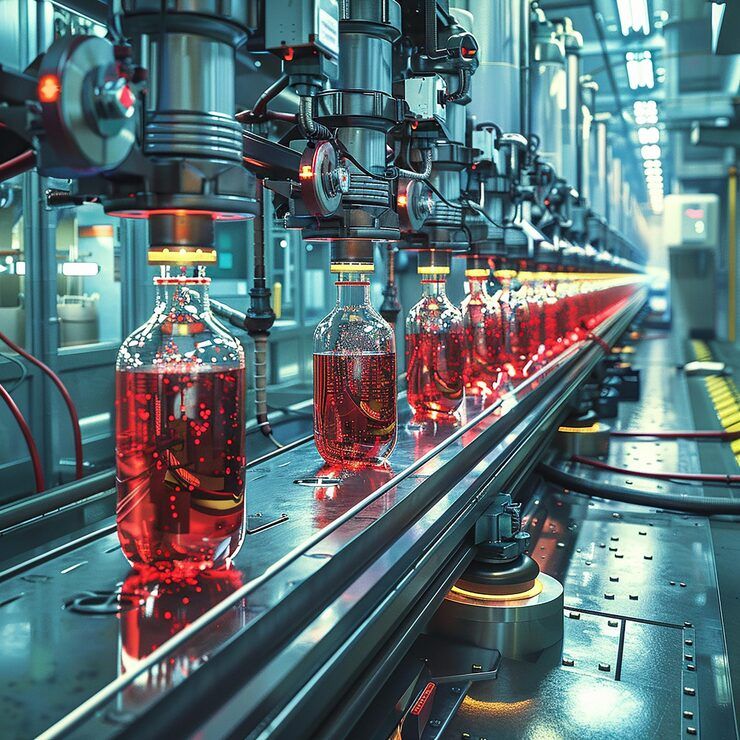
First, bottles are transported onto a conveyor system where sensors detect their position. The machine aligns each bottle beneath the filling nozzle before dispensing the product.
The filling system measures a predetermined quantity using volume, weight, pressure, or flow-based controls. Once the bottle reaches the target fill level, the nozzle stops dispensing automatically.
After filling, bottles continue along the conveyor to capping and labeling stations. Advanced systems include automatic bottle detection, overflow protection, and quality inspection before packaging.
The overall process ensures consistency across thousands of bottles while maintaining production speed and product hygiene.
Main Types of Bottle Filling Machines
Bottle filling machines are available in different designs based on product characteristics and production needs.
Gravity Bottle Filling Machines
Gravity filling machines use the natural force of gravity to fill bottles with free-flowing liquids such as water, juice, vinegar, and other low-viscosity products.
This type is commonly used in beverage production because it provides reliable filling for thin liquids without requiring complex pumping systems.
Piston Bottle Filling Machines
Piston filling machines use a piston cylinder to draw and dispense measured quantities of product. They are suitable for thicker liquids and semi-liquid products such as sauces, creams, lotions, honey, shampoos, and gels.
Their ability to handle varying viscosities makes them widely used in food and cosmetic manufacturing.
Overflow Filling Machines
Overflow filling machines fill bottles until the liquid reaches a consistent visual level. Excess product returns to the storage tank through overflow channels.
These machines are ideal for transparent bottles where equal fill levels improve shelf appearance.
Vacuum Filling Machines
Vacuum filling systems use vacuum pressure to draw liquid into containers. They are commonly used for glass bottles containing perfumes, essential oils, chemicals, and specialty liquids.
Vacuum technology helps reduce product waste and improves filling precision for delicate products.
Pump Filling Machines
Pump filling machines use pumps to move liquid from storage tanks into bottles. Different pump types allow manufacturers to fill products ranging from thin beverages to thick syrups and industrial chemicals.
These systems offer flexibility for multiple product types.
Bottle Filling Machines Based on Automation Level
Manufacturers select automation levels according to production volume and operational requirements.
Manual Filling Machines
Manual machines require operators to position bottles and control the filling process. They are generally used for small-scale production, laboratories, or startup manufacturing units.
Semi-Automatic Filling Machines
Semi-automatic systems automate the filling operation while operators load and remove bottles. They provide improved productivity compared to manual systems without requiring a fully automated production line.
Fully Automatic Filling Machines
Fully automatic machines perform bottle feeding, filling, bottle movement, and synchronization with capping and labeling equipment. These systems are suitable for medium and large manufacturing facilities that require continuous production.
Products That Can Be Filled Using Bottle Filling Machines
Bottle filling machines are designed to package many categories of products across industries.
In the food and beverage industry, they fill drinking water, fruit juice, milk, edible oil, sauces, syrups, flavored beverages, vinegar, and liquid sweeteners.
The pharmaceutical industry uses filling machines for syrups, oral medicines, disinfectants, liquid supplements, and healthcare products that require hygienic production environments.
Cosmetic manufacturers package shampoos, conditioners, lotions, creams, facial cleansers, perfumes, liquid soaps, and beauty oils using specialized filling systems.
Industrial applications include lubricants, cleaning chemicals, detergents, agricultural solutions, paints, adhesives, and automotive fluids packaged in bottles of different sizes.
Industries That Use Bottle Filling Machines
Bottle filling machines have become essential across numerous manufacturing sectors because packaging accuracy directly affects product quality.
The beverage industry uses high-speed filling lines to package bottled water, carbonated drinks, juices, tea, coffee beverages, and dairy products.
Food manufacturers rely on filling machines for cooking oils, sauces, ketchup, mayonnaise, syrups, and liquid condiments.
Pharmaceutical companies use sterile filling equipment for medicines, healthcare liquids, disinfectants, and nutritional supplements.
Cosmetic brands package skincare products, hair care products, fragrances, liquid makeup, and personal care solutions using hygienic filling systems.
Chemical manufacturers package industrial liquids, cleaning products, laboratory chemicals, and automotive fluids with machines designed for chemical compatibility.
Key Components of a Bottle Filling Machine
Several components work together to achieve accurate and efficient bottle filling.
The conveyor system transports bottles through the production line while maintaining spacing between containers.
The filling nozzles dispense product into bottles with controlled flow rates and may include anti-drip mechanisms to reduce spills.
Storage tanks hold the liquid product before filling begins, while pumps or valves regulate product movement.
Sensors detect bottle presence, positioning, fill levels, and operational safety conditions.
The control panel allows operators to adjust filling volume, production speed, bottle size, and machine settings. Modern machines often include touchscreen interfaces for easier operation and monitoring.
Benefits of Using Bottle Filling Machines
Bottle filling machines improve manufacturing efficiency by increasing production speed and reducing repetitive manual work. Automated filling allows businesses to produce large quantities while maintaining consistent filling accuracy.
Consistent packaging improves product appearance and helps manufacturers meet quality standards across production batches.
Reduced product wastage is another significant benefit. Precise measurement systems minimize overfilling and underfilling, improving material utilization.
Modern filling systems also support better hygiene by reducing direct human contact with products during packaging. This is particularly important for food, beverages, cosmetics, and pharmaceuticals.
Automation also enables manufacturers to integrate filling with capping, labeling, coding, and packaging systems for streamlined production.
Factors to Consider When Choosing a Bottle Filling Machine
Selecting the right bottle filling machine depends on production goals and product characteristics rather than choosing a single universal design.
Manufacturers should evaluate the type of product being filled, including viscosity, foaming behavior, and sensitivity to pressure.
Bottle material and size also influence machine selection because glass, plastic, and specialty containers require different handling mechanisms.
Production capacity determines whether manual, semi-automatic, or fully automatic equipment is appropriate.
Cleaning requirements are especially important for industries requiring hygienic or sterile production. Machines with clean-in-place or easy sanitation features simplify maintenance between production batches.
Future scalability is another consideration. Businesses often select equipment capable of accommodating additional bottle sizes or increased production volumes as demand grows.
Routine Maintenance for Better Performance
Regular maintenance helps bottle filling machines maintain accuracy, efficiency, and operational reliability.
Cleaning the filling nozzles prevents product buildup that may affect filling precision or hygiene. Storage tanks and pipelines should also be cleaned according to production schedules.
Operators should inspect seals, valves, pumps, hoses, and moving components for signs of wear or leakage.
Lubricating mechanical components reduces friction and helps extend equipment lifespan where recommended by the manufacturer.
Sensors and calibration systems should be checked periodically to ensure bottles are detected correctly and fill volumes remain consistent.
Preventive maintenance reduces unexpected downtime and helps maintain stable production quality throughout the year.
Common Operational Challenges and Solutions
Bottle filling machines may experience operational issues if maintenance or calibration is neglected.
Inconsistent fill levels often result from incorrect calibration, worn filling valves, or changing product viscosity. Regular calibration helps maintain accurate dispensing.
Foaming liquids may create inaccurate fills if filling speed is too high. Specialized nozzles and controlled filling techniques help reduce foam formation.
Bottle misalignment on conveyors can interrupt production. Proper guide rail adjustment and sensor positioning help keep bottles aligned.
Leaks around nozzles or seals may indicate worn components that require inspection and replacement during scheduled maintenance.
Monitoring machine performance helps identify small issues before they affect production output.
Recent Trends in Bottle Filling Machines in 2026
Bottle filling technology continues evolving as manufacturers adopt smarter automation and sustainability practices.
Modern filling machines increasingly include programmable touchscreen interfaces, recipe storage for multiple products, and automated changeovers between bottle sizes.
Artificial intelligence and smart sensors are improving production monitoring by detecting filling irregularities and reducing downtime through predictive maintenance.
Energy-efficient motors and optimized filling systems help reduce electricity consumption while maintaining production speed.
Many manufacturers are also designing filling equipment compatible with lightweight recyclable bottles and environmentally conscious packaging materials.
Digital monitoring systems now allow production managers to track machine performance, output, maintenance schedules, and operational efficiency through connected industrial platforms.
These innovations make bottle filling machines more adaptable to changing production demands while improving consistency and operational control.
Conclusion
Bottle filling machines have become an essential part of modern manufacturing because they combine accuracy, speed, hygiene, and efficiency into a single packaging solution. Whether packaging beverages, pharmaceuticals, cosmetics, food products, or industrial liquids, these machines help manufacturers maintain consistent product quality while reducing waste and manual effort.
Understanding the different filling technologies, automation levels, maintenance practices, and application areas helps businesses select equipment that matches their production needs. As automation, smart monitoring, and sustainable packaging continue advancing in 2026, bottle filling machines are becoming more intelligent, flexible, and efficient, supporting reliable production across industries of all sizes.
Frequently Asked Questions
What is the purpose of a bottle filling machine?
A bottle filling machine accurately fills bottles with liquids, semi-liquids, or other products while maintaining consistent volume and reducing manual handling.
Which industries commonly use bottle filling machines?
Food and beverage, pharmaceutical, cosmetic, chemical, agricultural, and household product manufacturers all use bottle filling machines for packaging.
What is the difference between gravity and piston filling machines?
Gravity filling machines are suitable for thin liquids, while piston filling machines handle thicker or semi-liquid products with greater precision.
Are bottle filling machines suitable for different bottle sizes?
Yes. Many modern bottle filling machines can be adjusted or programmed to accommodate multiple bottle shapes and sizes.
How often should bottle filling machines be maintained?
Maintenance schedules depend on production frequency, product type, and machine design, but regular cleaning, inspection, lubrication, and calibration are recommended to ensure reliable performance and consistent filling accuracy.