Filters are used in homes, laboratories, commercial buildings, manufacturing facilities, vehicles, and many other environments to separate unwanted particles or substances from a fluid or gas. Although the basic purpose is simple, filters come in many forms, each designed for particular materials, particle sizes, flow conditions, and operating environments.
Understanding filter types makes it easier to identify the right solution for a specific application. A filter used for drinking water, for example, has different requirements from one used to protect industrial equipment from dust or to clean compressed air.
This guide explains the major filter types, how they work, where they are commonly used, and the factors that matter when selecting one.
What Is a Filter?
A filter is a device or material designed to allow a desired fluid or gas to pass through while retaining unwanted particles, contaminants, or other substances.
The material being filtered may be:
- Air
- Water
- Oil
- Fuel
- Chemicals
- Compressed gases
- Process liquids
Filtering can involve physical separation, adsorption, absorption, or a combination of mechanisms. The appropriate method depends on the type of contamination and the required level of filtration.
Why Are Different Filter Types Needed?
No single filter design can efficiently handle every filtration requirement. Contaminants vary considerably in size, shape, concentration, and chemical properties.
For example, large dust particles can often be removed with relatively coarse filtration, while microscopic particles may require finer media or specialized separation technology.
Other factors also influence filter selection, including flow rate, temperature, pressure, fluid compatibility, available space, and how frequently the filter needs maintenance.
This is why understanding the differences between filter types is important before selecting a filtration system.
Common Filter Types Explained
Mechanical Filters
Mechanical filters are among the most straightforward types. They physically capture particles as the fluid or gas passes through a filtering medium.
The filter medium may consist of fibers, mesh, membranes, or other porous materials. Particle capture can occur when contaminants are larger than the available openings or become trapped within the filter structure.
Mechanical filtration is widely used for air, water, and industrial fluids. It is particularly useful when the primary concern is removing suspended solid particles.
Cartridge Filters
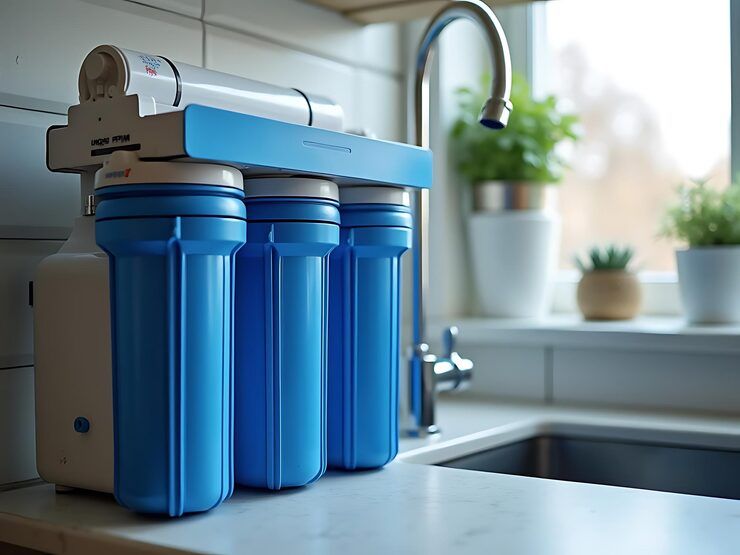
Cartridge filters use a replaceable cylindrical filtering element housed inside a casing. The cartridge contains a specific filtration medium selected for the application.
Depending on the design, cartridge filters can remove sediment, dust, suspended solids, and other contaminants from liquids or gases.
Their modular design makes them useful in residential, commercial, laboratory, and industrial systems. Different cartridge materials and filtration grades allow the same basic housing concept to accommodate different requirements.
Bag Filters
Bag filters use a flexible bag-shaped filter element through which the fluid flows. Contaminants collect on or within the bag while the filtered fluid continues through the system.
They are commonly found in industrial liquid filtration applications where relatively high volumes need to be processed. Bag filters can also be selected in different filtration grades depending on the size of particles that need to be removed.
One important consideration is the pressure difference that develops as contaminants accumulate. Monitoring this pressure change can help indicate when maintenance is required.
Membrane Filters
Membrane filters use a thin, selectively permeable barrier to separate particles, microorganisms, or dissolved substances from a fluid.
Different membrane technologies operate at different separation levels. Examples include microfiltration, ultrafiltration, nanofiltration, and reverse osmosis.
Membrane filtration is used in water treatment, laboratory processes, food production, pharmaceutical applications, and other environments where controlled separation is important.
The correct membrane depends on the substance being removed, the characteristics of the fluid, and the required separation level.
HEPA Filters
High-Efficiency Particulate Air, or HEPA, filters are specialized air filters designed to capture very small airborne particles with high efficiency.
They are commonly used in controlled environments, air purification equipment, healthcare facilities, laboratories, cleanrooms, and some residential air-cleaning systems.
HEPA filters are intended primarily for particulate filtration. They should not automatically be considered a solution for gases, odors, or every type of airborne contaminant.
Activated Carbon Filters
Activated carbon filters work differently from ordinary particle filters. Their primary mechanism is adsorption, where certain molecules adhere to the surface of the carbon material.
They are commonly used to reduce certain odors, organic compounds, and other contaminants from air or water.
Activated carbon is often combined with another filtration method because carbon does not replace every type of particle-removal technology. The performance depends on the contaminant, contact time, carbon characteristics, and operating conditions.
Oil and Fuel Filters
Oil and fuel filters are designed specifically for fluid systems such as engines, hydraulic equipment, and machinery.
Their purpose is generally to remove particles and contaminants that could interfere with equipment operation or contribute to component wear.
Filter design varies according to the fluid, operating pressure, flow requirements, and equipment specifications. Using an inappropriate filter can restrict flow or provide inadequate protection.
Air Filters
Air filters are used in ventilation systems, industrial equipment, vehicles, air-cleaning systems, and other applications where airborne particles need to be controlled.
Common air-filter media include fibrous materials, pleated materials, foam, and specialized high-efficiency media.
Air filters are often categorized according to their particle-capture performance and application. A residential ventilation filter, for instance, has different requirements from a cleanroom filtration system.
Strainers and Screen Filters
Strainers and screen filters generally use a mesh or perforated surface to remove larger solid particles from liquids or gases.
They are often used as an initial stage of filtration. Because they can capture relatively large particles without relying on very fine media, they can help protect pumps, valves, pipes, and downstream filtration equipment.
Their simplicity can make inspection and cleaning relatively straightforward, depending on the design.
How to Choose the Right Filter Type
Selecting a filter involves more than identifying the material that needs to be removed. Several technical factors should be considered together.
1. Identify the contaminant: Determine whether the problem involves dust, sediment, microorganisms, oil, chemicals, odors, dissolved substances, or another contaminant.
2. Understand particle size: The approximate size and distribution of unwanted particles helps determine the required filtration level.
3. Check the fluid or gas: Filter materials must be compatible with the substance being processed. Chemical compatibility becomes particularly important for industrial applications.
4. Consider flow requirements: A filter must accommodate the required flow without creating an unacceptable pressure drop.
5. Review temperature and pressure: Operating conditions can affect both the filter material and the housing. Industrial applications may require components designed for elevated pressure or temperature.
6. Consider maintenance: Some filters are disposable, while others can be cleaned or have replaceable elements. Maintenance requirements should fit the operating environment.
7. Consider the complete system: A filtration system may use several stages, beginning with coarse filtration and progressing toward finer separation.
Single-Stage vs. Multi-Stage Filtration
Some applications require only one filtration stage, while others benefit from multiple stages.
A multi-stage system may begin with a coarse filter to capture larger particles, followed by progressively finer filtration. This approach can reduce the load placed on the finer elements and help maintain consistent system performance.
For example, a water-treatment arrangement might use sediment filtration before a membrane stage. Similarly, an industrial air system could use preliminary particle removal before higher-efficiency filtration.
The appropriate configuration depends on the contamination profile and the required quality of the final output.
Common Filter Selection Mistakes
Choosing a filter based only on its appearance or nominal filtration rating can lead to poor results. Other characteristics, such as flow capacity, pressure drop, material compatibility, operating temperature, and contaminant loading, also matter.
Another common mistake is selecting filtration that is unnecessarily fine. Very fine filtration can increase resistance to flow and may require more frequent maintenance if the incoming fluid contains a high concentration of particles.
It is also important to follow the equipment manufacturer's specifications when replacing filters in dedicated systems.
Frequently Asked Questions
What is the most common type of filter?
There is no single filter that is most appropriate for every application. Cartridge, mechanical, air, membrane, screen, and other filter types are widely used in different environments.
What is the difference between a filter and a strainer?
A strainer typically uses a relatively coarse mesh or screen to remove larger particles, while a filter can use finer or more specialized media for greater separation.
Are all filters reusable?
No. Some filter elements are designed for replacement, while others can be cleaned and reused. The correct maintenance method depends on the filter material and manufacturer's specifications.
Why does a filter become less effective over time?
As contaminants accumulate, the filter can become loaded. This may increase pressure drop and reduce flow. The appropriate maintenance or replacement interval depends on the application and operating conditions.
Can one filter remove every type of contaminant?
Generally, no. Different contaminants require different separation mechanisms. Some systems therefore combine multiple filtration technologies to address several types of contamination.
Conclusion
Filter types differ because filtration requirements differ. Mechanical, cartridge, bag, membrane, HEPA, activated carbon, screen, air, oil, and fuel filters each serve particular purposes.
The right choice depends on the contaminant, particle size, fluid or gas characteristics, flow rate, pressure, temperature, material compatibility, and maintenance requirements. Understanding these factors provides a practical foundation for comparing filtration options and designing a system that performs reliably for its intended application.