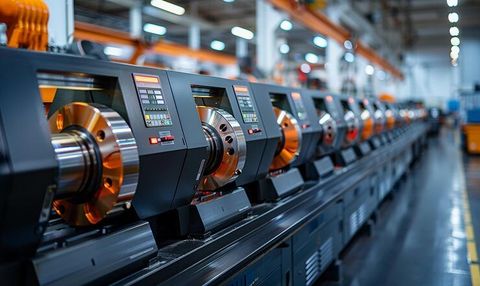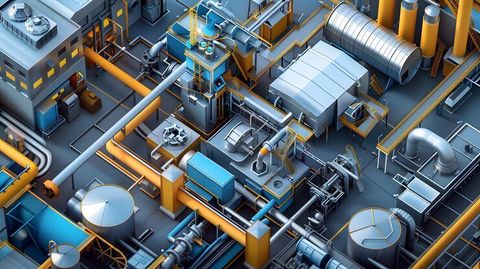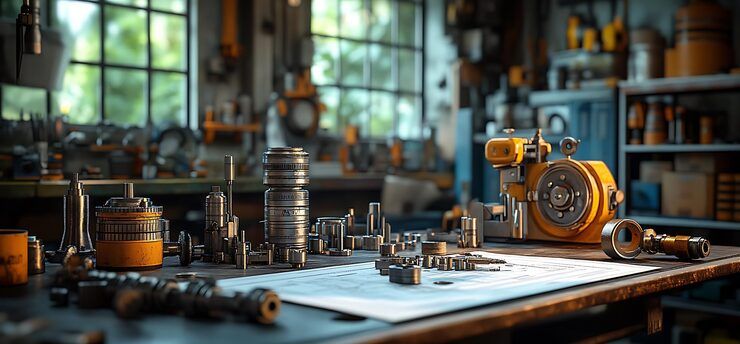
Industrial parts are the individual components used to build, operate, connect, control, protect, and maintain machines, equipment, production systems, and industrial infrastructure. They can range from simple fasteners and bearings to highly engineered gears, valves, seals, couplings, electrical components, and hydraulic or pneumatic elements.
Although many industrial parts are relatively small compared with the machines they support, their function can be critical. A worn bearing can affect machine movement, a damaged seal can allow fluid to escape, and an incorrectly selected fastener can weaken an assembly. Understanding what different parts do helps equipment operators, maintenance teams, engineers, and purchasing professionals make more informed decisions.
An industrial parts guide is therefore useful not only for identifying components but also for understanding how they work together within a larger system.
Why Industrial Parts Matter in Modern Industry
Industrial equipment depends on the coordinated performance of many components. Manufacturing machines, conveyors, pumps, compressors, material-handling systems, agricultural equipment, construction machinery, and processing plants all contain assemblies made from numerous individual parts.
The quality and suitability of these components can influence equipment reliability, operating efficiency, safety, maintenance requirements, and service life. However, selecting an industrial part is not simply a matter of finding a component with the same appearance as the original. Dimensions, materials, load requirements, operating conditions, tolerances, connection methods, and environmental exposure can all affect compatibility.
This is why identifying the application first is generally more useful than selecting a part based only on its name or appearance.
Major Categories of Industrial Parts
Industrial parts can be grouped according to their function and the type of system in which they operate.
Mechanical parts are among the most common. These include gears, shafts, bearings, pulleys, rollers, sprockets, bushings, couplings, springs, and mechanical fasteners. They generally support movement, transmit force, connect assemblies, or maintain mechanical alignment.
Bearings are designed to support rotating or moving components while reducing friction. Gears transfer motion and torque between shafts, while couplings connect rotating shafts and can accommodate certain alignment differences. Shafts transmit rotational force, whereas bushings can provide support between moving surfaces.
Fasteners form another important category. Bolts, nuts, screws, washers, studs, pins, and retaining rings are used to assemble and secure industrial components. Their dimensions, thread specifications, material, strength, and installation requirements need to match the application.
Fluid-handling parts are used in hydraulic, pneumatic, water, chemical, fuel, and other process systems. Valves, fittings, hoses, pipes, seals, gaskets, filters, and connectors help control, transport, isolate, or contain fluids and gases.
Electrical and electronic parts are also central to modern industrial equipment. Switches, connectors, relays, sensors, circuit protection components, terminals, motors, and control components help machines receive power, monitor operating conditions, and perform automated functions.
Materials Used in Industrial Parts
Material selection has a direct relationship with how an industrial component performs. Common materials include carbon steel, stainless steel, alloy steel, aluminum, brass, bronze, cast iron, engineering plastics, rubber, and specialized composites.
Steel is widely used where strength and durability are important. Stainless steel can be selected for applications where corrosion resistance is a significant consideration. Aluminum provides relatively low weight while offering useful mechanical properties for certain applications.
Engineering plastics are used in components such as bushings, guides, seals, housings, and insulating parts where low weight, chemical resistance, electrical insulation, or reduced friction may be beneficial. Rubber and elastomeric materials are commonly found in seals, gaskets, hoses, vibration-control components, and flexible connections.
The correct material depends on the operating environment rather than simply the perceived strength of the material. Temperature, chemicals, moisture, pressure, friction, vibration, electrical conditions, and repeated loading should all be considered.
How to Select the Right Industrial Part
Selecting an industrial component begins with understanding the equipment and the job the part must perform. The first consideration is usually dimensional compatibility. Measurements such as length, diameter, thickness, bore size, thread type, mounting pattern, and tolerances may determine whether a component can physically fit.
The operating load is another important factor. A component exposed to high radial loads, axial loads, torque, pressure, impact, or continuous vibration may require different characteristics from one used under light-duty conditions.
Operating speed also matters. Rotating components such as bearings, gears, pulleys, and couplings can have specific speed limitations. Heat generation, lubrication requirements, and dynamic balance may become increasingly important as operating speed rises.
The surrounding environment should also be evaluated. Outdoor machinery, food-processing equipment, chemical systems, mining machinery, and high-temperature industrial equipment may require very different materials and protective characteristics.
Compatibility with the existing assembly is equally important. A part that matches one dimension but differs in thread standard, electrical specification, material compatibility, sealing method, or load rating may not function correctly.
Understanding Industrial Part Specifications
Industrial parts are often identified through detailed specifications rather than simple product names. These specifications can include dimensions, tolerances, material grades, operating limits, connection standards, surface finishes, and performance characteristics.
Part numbers are especially useful when replacing components because they can provide a more precise identification method than visual inspection. Equipment manuals, engineering drawings, manufacturer documentation, labels, and maintenance records may also contain important identification information.
Standards can simplify component selection by establishing common dimensions, testing methods, materials, or connection requirements. Depending on the industry and application, different national or international standards may apply.
When identifying an unfamiliar component, it is useful to record all available markings and measurements before searching for a replacement. This reduces the risk of selecting a visually similar but technically incompatible part.
The Role of Industrial Parts in Maintenance
Maintenance is closely connected with industrial component selection. Some parts are designed to operate for long periods, while others are considered wear components and require periodic inspection or replacement.
Bearings, seals, belts, filters, gaskets, cutting components, and certain fasteners may experience gradual wear depending on operating conditions. Regular inspection can help identify unusual vibration, excessive noise, overheating, leakage, looseness, corrosion, or changes in machine performance.
Preventive maintenance focuses on scheduled inspection and replacement, while condition-based maintenance uses information about actual equipment condition to determine when attention is required. Both approaches can reduce unexpected equipment interruptions when applied appropriately.
Keeping accurate records of component replacements can also improve maintenance planning. Recording part identification, installation date, equipment location, observed failure conditions, and maintenance actions can help reveal recurring problems.
Common Causes of Industrial Part Failure
Industrial components can fail for many reasons. Excessive loading, incorrect installation, poor alignment, inadequate lubrication, contamination, corrosion, excessive temperature, vibration, fatigue, and material incompatibility are common contributors.
In some situations, the component itself may not be the underlying problem. For example, repeated bearing failures could result from shaft misalignment, contamination, incorrect lubrication, or excessive loading rather than from the bearing alone.
This distinction is important because simply replacing a failed component without addressing the underlying condition can lead to repeated failures. Effective troubleshooting considers the entire assembly and operating environment.
Industrial Parts and Equipment Reliability
Industrial reliability depends on how individual components interact as a system. A machine may contain hundreds or thousands of parts, and each component has a particular role in maintaining mechanical, electrical, hydraulic, pneumatic, or structural performance.
For this reason, industrial parts should be considered as part of the complete equipment design rather than as isolated objects. Correct dimensions, suitable materials, appropriate specifications, proper installation, and regular maintenance all contribute to dependable operation.
What to Consider Before Replacing an Industrial Part
Before replacing a component, identify the equipment model and assembly where it is installed. Confirm the original part number when available and record relevant dimensions and specifications. Consider the load, speed, pressure, temperature, environment, and operating cycle.
It is also useful to determine why the original component failed. If the failure resulted from misalignment, contamination, overloading, excessive heat, or another system-level issue, replacing the part alone may not resolve the problem.
For critical machinery, technical documentation and qualified engineering or maintenance personnel can help verify compatibility before installation.
Conclusion
Industrial parts form the foundation of modern machinery and production systems. From bearings, gears, shafts, and fasteners to valves, seals, electrical components, and sensors, each part contributes to the operation of a larger industrial assembly.
Understanding the function, material, specifications, operating conditions, and maintenance requirements of these components makes identification and replacement more systematic. The most suitable industrial part is not necessarily the one that simply fits physically; it is the component whose specifications and characteristics match the equipment, application, and operating environment.
A practical approach is to start with the machine and its operating requirements, identify the component precisely, verify its specifications, understand the cause of any previous failure, and maintain accurate records. This approach provides a clearer foundation for equipment maintenance, component replacement, and long-term industrial reliability.