Industrial tanks are an important part of many manufacturing, processing, agricultural, chemical, water treatment, energy, and storage operations. They are designed to contain liquids, gases, powders, or other materials under specific operating conditions.
Although an industrial tank may look like a simple container, its design involves several considerations, including the material being stored, temperature, pressure, capacity, corrosion resistance, installation environment, and maintenance requirements.
Understanding the basic types of industrial tanks and how they are used can help facility managers, engineers, and other decision-makers identify the characteristics that matter most for a particular application.
What Are Industrial Tanks?
Industrial tanks are large-scale storage or processing vessels used in commercial and industrial environments. Depending on their design, they can hold water, chemicals, fuels, oils, food ingredients, wastewater, compressed substances, or other industrial materials.
Some tanks are intended mainly for storage, while others are integrated into production processes. Process tanks, for example, may include mixers, heating or cooling systems, sensors, internal fittings, and other equipment.
Tank design is generally determined by the physical and chemical properties of the material being handled and the conditions under which the tank will operate.
Common Types of Industrial Tanks
Industrial tanks come in many configurations. The most suitable type depends on the application, material, available space, and operating conditions.
Storage Tanks
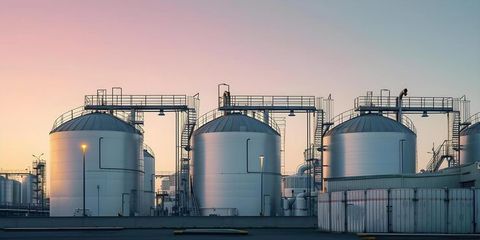
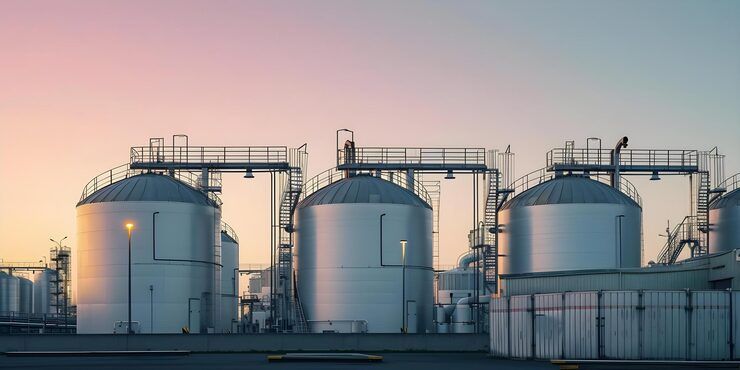
Storage tanks are primarily designed to hold materials for a period before they are used, processed, transported, or distributed. They are commonly found in water treatment facilities, manufacturing plants, food processing facilities, and energy-related operations.
They may be installed above ground or below ground depending on the facility layout and application requirements.
Process Tanks
Process tanks are incorporated into manufacturing or treatment operations. Unlike basic storage tanks, they may be designed for mixing, blending, heating, cooling, settling, or chemical reactions.
Their design can include agitators, temperature controls, inspection openings, valves, sensors, and other components.
Pressure Tanks
Pressure tanks are engineered to operate with materials at pressures above or below normal atmospheric conditions. Their construction requires careful consideration of pressure ratings, temperature, materials, and applicable engineering standards.
Pressure vessels are particularly important in industries where gases or pressurized liquids are handled.
Water and Wastewater Tanks
Water tanks are widely used for industrial water storage, process water, fire protection systems, and other applications. Wastewater tanks may be used for collection, equalization, treatment, or temporary holding.
Their design needs to account for water chemistry, biological activity, sediment, cleaning requirements, and environmental conditions.
Chemical Storage Tanks
Chemical tanks are designed around the characteristics of the substances they contain. Chemical compatibility is particularly important because certain materials can react with or gradually degrade tank surfaces.
Tank construction may therefore involve specialized plastics, stainless steel, coated metals, or other corrosion-resistant materials.
Industrial Tank Materials
The tank material has a direct relationship with durability, compatibility, maintenance, and operating conditions.
Carbon steel is commonly used for many industrial applications because of its structural properties and suitability for large tanks. Protective coatings or linings may be used where corrosion protection is required.
Stainless steel provides strong corrosion resistance and is frequently used in food processing, pharmaceutical, chemical, and other environments where hygiene and material compatibility are important.
Fiberglass-reinforced plastic (FRP) can provide useful resistance to many corrosive substances while offering relatively low weight compared with some metal construction.
Polyethylene and other plastics are used for certain water, chemical, agricultural, and industrial applications. Their suitability depends on temperature, chemical compatibility, structural requirements, and tank configuration.
Selecting a material should always involve checking compatibility with the stored substance and the intended operating conditions.
Above-Ground vs. Underground Tanks
Industrial tanks can be installed above ground or underground.
Above-ground tanks are generally easier to inspect, access, maintain, and monitor. Their installation can also make leak detection and external inspection more straightforward.
Underground tanks can help conserve surface space and may be useful where site layout or environmental conditions influence installation decisions. However, inspection, maintenance, groundwater considerations, and leak detection can be more challenging.
The choice should consider site conditions, regulations, accessibility, environmental requirements, and the long-term maintenance strategy.
How Industrial Tanks Are Used
Industrial tanks serve many purposes across different sectors.
In manufacturing, tanks can store raw materials, intermediate products, finished liquids, or process chemicals.
In water treatment, tanks can support water storage, chemical dosing, sedimentation, treatment processes, and wastewater management.
In food and beverage production, tanks may hold ingredients or liquids during preparation and processing. Hygiene, cleanability, and material compatibility are especially important.
In agriculture, tanks can be used for irrigation water, fertilizers, and other agricultural materials.
In energy and fuel-related operations, specialized tanks may be used for storing various fuels and process fluids, subject to applicable safety and environmental requirements.
Key Factors When Selecting an Industrial Tank
Choosing an industrial tank involves more than determining how much material it needs to hold. Several factors should be evaluated together.
Capacity
Determine the required working volume rather than considering only the maximum physical capacity. Adequate space may be necessary for expansion, temperature changes, mixing, or operational requirements.
Material Compatibility
The tank material must be compatible with the stored substance. Consider chemical concentration, acidity or alkalinity, temperature, and potential corrosive properties.
Temperature
Temperature can affect both the stored material and the tank itself. Some applications require heating, cooling, insulation, or temperature monitoring.
Pressure
If the application involves pressure or vacuum conditions, the tank must be appropriately engineered for those operating conditions. Pressure requirements should never be estimated casually.
Installation Environment
Available space, foundation conditions, weather exposure, accessibility, ventilation, and surrounding equipment can influence tank configuration and placement.
Cleaning and Maintenance
Consider how the tank will be inspected, cleaned, repaired, and monitored. Access openings, drainage arrangements, internal surfaces, and inspection points can influence long-term usability.
Safety and Maintenance Considerations
Industrial tank safety depends on proper design, installation, operation, inspection, and maintenance.
Regular inspections can help identify corrosion, cracks, deformation, damaged coatings, leakage, worn fittings, and other potential problems. The inspection frequency should reflect the tank design, stored material, operating conditions, applicable standards, and risk level.
Operators should also understand the tank's operating limits and follow established procedures for filling, draining, cleaning, isolation, and maintenance.
For tanks containing hazardous or environmentally sensitive materials, secondary containment, monitoring systems, appropriate ventilation, and emergency procedures may be important depending on the application.
Industrial Tank Accessories and Components
A tank rarely operates as an isolated piece of equipment. Supporting components can include valves, pumps, level indicators, temperature sensors, pressure instruments, mixers, vents, manways, overflow systems, drains, and filtration equipment.
Instrumentation can provide useful information about tank conditions and help operators monitor levels, temperature, pressure, and other important parameters.
The exact components depend on whether the tank is used for simple storage or forms part of a larger processing system.
Frequently Asked Questions
What is an industrial tank used for?
An industrial tank is used to store, process, mix, heat, cool, or otherwise contain materials used in industrial operations. Applications range from water and wastewater management to chemical processing and manufacturing.
Which material is commonly used for industrial tanks?
Carbon steel, stainless steel, fiberglass-reinforced plastic, polyethylene, and other specialized materials are commonly used. The appropriate material depends on chemical compatibility, temperature, pressure, structural requirements, and the operating environment.
What is the difference between a storage tank and a process tank?
A storage tank primarily holds material, while a process tank is designed to participate in an industrial process. Process tanks may include mixers, heating or cooling systems, sensors, and other equipment.
How often should an industrial tank be inspected?
Inspection schedules depend on the tank type, stored material, operating conditions, design requirements, and applicable regulations. Manufacturers, engineers, and relevant standards can provide guidance for establishing an appropriate inspection program.
What should be considered before selecting an industrial tank?
Important considerations include capacity, material compatibility, temperature, pressure, installation location, accessibility, maintenance requirements, safety systems, and the characteristics of the stored material.
Conclusion
Industrial tanks are essential components of many industrial systems, but their designs vary significantly according to their intended purpose. Storage tanks, process tanks, pressure vessels, water tanks, wastewater tanks, and chemical tanks each have different requirements.
Understanding the stored material, operating conditions, capacity, construction material, installation environment, safety requirements, and maintenance needs provides a practical foundation for evaluating tank options.
A well-planned tank system should not only meet immediate storage or processing requirements but also support reliable inspection, maintenance, monitoring, and safe operation throughout its intended service life.