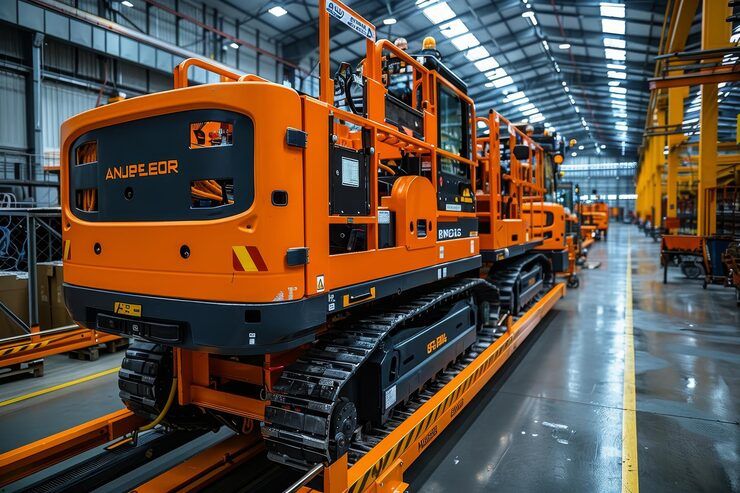
Modern equipment has become an important part of how people work, manufacture products, build infrastructure, manage facilities, and complete everyday tasks. From automated industrial machines and construction equipment to agricultural systems and smart workplace devices, equipment has changed significantly as technology has advanced.
Unlike traditional equipment, many modern systems combine mechanical components with electronics, sensors, software, automation, and data processing. These developments can improve accuracy, consistency, safety, and operational efficiency when the equipment is properly selected and maintained.
Understanding modern equipment facts is useful for students, business professionals, technicians, facility managers, and anyone who wants to understand how contemporary machines and equipment work. The following guide explains the major characteristics, categories, applications, and technology trends shaping modern equipment.
What Is Modern Equipment?
Modern equipment refers to machines, tools, systems, and supporting technologies designed or upgraded using current engineering and digital technologies. It can range from relatively simple powered tools to complex automated systems capable of monitoring conditions and performing tasks with limited human intervention.
A modern piece of equipment may include several interconnected elements:
- Mechanical components that perform physical work
- Electrical or electronic systems that control operation
- Sensors that collect information
- Software that processes data or controls functions
- Automated controls that reduce repetitive manual work
- Safety systems designed to detect abnormal conditions
- Communication technologies that allow equipment to exchange information
The exact combination depends on the equipment's purpose. A modern manufacturing machine, for example, may use sensors and computer-controlled movement, while agricultural equipment may combine GPS, cameras, environmental sensors, and automated controls.
Major Types of Modern Equipment
Modern equipment exists across many industries, so there is no single category that covers every system. Several broad groups help explain how it is used.
Industrial Equipment
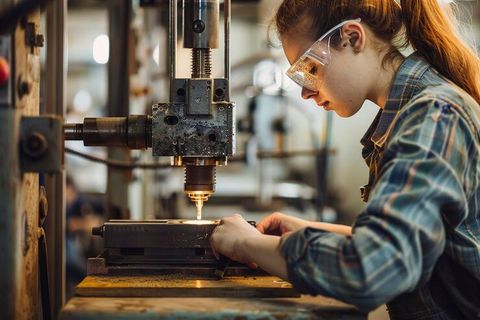
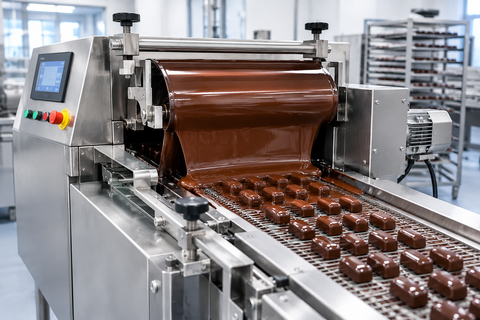
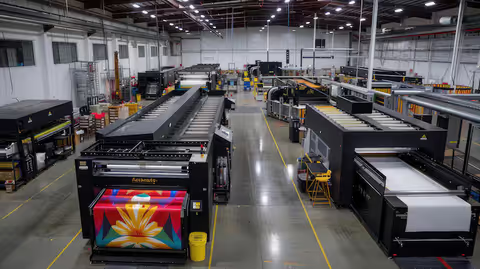
Industrial equipment is designed for manufacturing, processing, material handling, packaging, and other production activities. Examples include CNC machines, industrial robots, compressors, pumps, conveyors, automated inspection systems, and production machinery.
Many industrial machines now use computer-based controls. This allows operators to configure operating parameters and monitor equipment performance more precisely.
Construction Equipment
Construction sites use equipment for excavation, lifting, drilling, grading, transportation, and material handling. Excavators, loaders, cranes, compactors, drilling machines, and advanced surveying equipment are common examples.
Modern construction equipment increasingly incorporates digital displays, telematics, positioning systems, cameras, and automated controls. These technologies can help operators understand machine status and working conditions.
Agricultural Equipment
Agricultural machinery has progressed beyond basic mechanical systems. Modern tractors, harvesters, irrigation systems, planting machines, and crop-monitoring equipment can incorporate sensors, GPS, automation, and data analysis.
Precision agriculture is one example of how equipment can use information to support more targeted farming activities. Data about field conditions can help guide decisions related to planting, irrigation, and crop management.
Material Handling Equipment
Warehouses, factories, distribution centers, and logistics facilities rely on equipment to move and organize materials. Forklifts, conveyors, automated storage systems, pallet-handling equipment, and autonomous mobile robots are examples.
Modern material-handling systems can communicate with inventory and warehouse-management software, allowing physical movement to become more closely connected with digital information.
Commercial and Facility Equipment
Modern buildings also depend on specialized equipment. Heating and cooling systems, elevators, generators, security systems, cleaning machines, and energy-management equipment are increasingly connected through digital controls.
These systems can monitor operating conditions and provide information that helps facility teams identify maintenance requirements or unusual activity.
Key Features of Modern Equipment
One of the most important facts about modern equipment is that its capabilities increasingly depend on the interaction between hardware and software.
Automation
Automation allows equipment to perform certain tasks with limited manual intervention. Depending on the application, automation may control movement, temperature, pressure, speed, positioning, or production sequences.
Automation does not necessarily mean that people are removed from the process. Operators may still be responsible for setup, supervision, inspection, maintenance, and decision-making.
Sensors and Monitoring
Sensors are widely used to collect information about equipment and its surroundings. They can monitor factors such as temperature, vibration, pressure, speed, position, humidity, and electrical conditions.
Continuous monitoring can help identify unusual operating conditions before they develop into larger equipment problems.
Digital Controls
Many modern machines use digital control panels or computer interfaces instead of purely mechanical controls. These interfaces can display operating information, system alerts, settings, and maintenance indicators.
Digital controls can also make complex equipment easier to configure when the interface is properly designed.
Connectivity
Connected equipment can exchange information with other machines, computers, cloud platforms, or management systems. This capability is often associated with the Industrial Internet of Things, or IIoT.
Connectivity can support remote monitoring, equipment tracking, production analysis, and maintenance planning.
Energy Efficiency
Energy efficiency has become an important consideration in equipment design. Manufacturers increasingly use improved motors, variable-speed drives, efficient power systems, improved insulation, and intelligent controls to reduce unnecessary energy consumption.
Efficiency depends not only on equipment design but also on correct sizing, operating conditions, maintenance, and user practices.
How Modern Equipment Improves Work
Modern equipment can provide several practical benefits when appropriately designed and operated.
Greater consistency: Automated systems can repeat defined processes with a high degree of consistency.
Improved productivity: Equipment can perform repetitive or physically demanding tasks efficiently, allowing workers to focus on supervision, planning, quality control, and other responsibilities.
Better information: Sensors and digital monitoring provide information that may not be visible through traditional inspection alone.
Enhanced safety: Cameras, sensors, emergency controls, protective systems, and automated shutdown features can help reduce exposure to certain workplace hazards.
More efficient maintenance: Equipment monitoring can help maintenance teams identify unusual conditions and plan inspections or repairs.
The actual benefits vary according to equipment type, operating environment, maintenance practices, and the skills of the people using it.
Modern Equipment and Predictive Maintenance
Traditional maintenance often follows a fixed schedule. Equipment may be inspected or serviced after a certain number of operating hours or at predetermined intervals.
Modern systems can support condition-based and predictive maintenance. Sensors collect information about equipment performance, and software can analyze changes in operating conditions.
For example, unusual vibration in rotating machinery may indicate a developing mechanical issue. Increasing temperature or changes in energy consumption can also provide useful maintenance signals.
Predictive maintenance does not eliminate the need for physical inspection. Instead, it adds another source of information that can help maintenance teams make more informed decisions.
Safety and Responsible Use
Advanced equipment can be highly capable, but technology does not remove the need for safe operating practices.
Users should understand the equipment's operating instructions, limitations, safety controls, and maintenance requirements. Appropriate training is particularly important when equipment contains moving parts, high electrical power, pressure systems, heat sources, or automated movement.
Regular inspections can help identify damaged components, unusual sounds, leaks, worn parts, or other conditions that require attention.
Safety systems should also be tested according to the equipment manufacturer's procedures. Bypassing protective mechanisms can create serious risks and should not be treated as a normal operating practice.
Emerging Trends in Modern Equipment
Several technology trends are influencing the next generation of equipment.
Artificial intelligence: AI can analyze equipment data, recognize patterns, support quality inspection, and assist with operational decisions.
Robotics: Robots are becoming more adaptable and can perform tasks involving assembly, transportation, inspection, handling, and other repetitive activities.
Digital twins: A digital twin creates a digital representation of a physical system that can be used for monitoring, analysis, simulation, or optimization.
Remote monitoring: Connected equipment can provide operational information from locations away from the physical machine.
Electrification: Some equipment traditionally powered by combustion engines is being redesigned around electric power systems, particularly where charging infrastructure and operating conditions support the transition.
Human-machine collaboration: New equipment increasingly focuses on helping people work alongside automated systems rather than treating automation and human work as completely separate activities.
What to Consider When Evaluating Modern Equipment
Choosing or evaluating equipment requires more than looking at its technological features. The equipment should match the actual task and operating environment.
Important considerations include:
- Intended application and workload
- Required capacity and operating range
- Ease of operation
- Safety features
- Energy requirements
- Maintenance needs
- Availability of technical support and replacement components
- Compatibility with existing systems
- Data and connectivity requirements
- Expected operating conditions and environment
The most technologically advanced equipment is not automatically the most appropriate option. Suitability depends on whether its capabilities match the user's practical requirements.
Conclusion
Modern equipment represents the combination of mechanical engineering, electronics, automation, software, sensors, and data-driven technologies. Its applications extend across manufacturing, construction, agriculture, logistics, commercial buildings, energy, and many other areas.
The most important modern equipment facts are not limited to individual machines. The larger change is the movement toward connected, automated, monitored, and increasingly intelligent systems. Understanding how these technologies work can help users operate equipment more safely, recognize important maintenance needs, and make better-informed decisions about equipment for specific applications.
As technology continues to develop, modern equipment is likely to become more connected, energy-conscious, adaptable, and capable of working alongside people. The fundamentals, however, remain important: choosing equipment for the right application, operating it correctly, maintaining it consistently, and understanding its limitations.