Singapore is a popular destination for international travelers, business visitors, families, and people exploring Southeast Asia. Known for its efficient public transportation, modern skyline, diverse food culture, and well-maintained urban environment, the city offers a wide range of accommodation options. Singapore hotels include luxury properties, business hotels, boutique stays, family-friendly establishments, and budget-conscious accommodation.
Choosing the right hotel involves more than comparing room photographs or facilities. The location, transport connections, room size, cancellation conditions, and access to everyday services can all influence the travel experience. A hotel close to major attractions may reduce travel time, while a property in a quieter neighborhood may provide a different atmosphere.
Understanding Singapore's hotel landscape helps travelers select accommodation that suits their itinerary, travel style, and practical requirements. Whether visiting for a short stopover, a family holiday, or a longer business trip, learning about the city's main hotel districts and accommodation features can make planning easier.
Types of Hotels Available in Singapore
Luxury Hotels
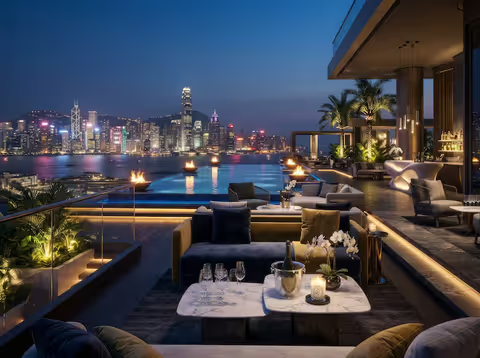
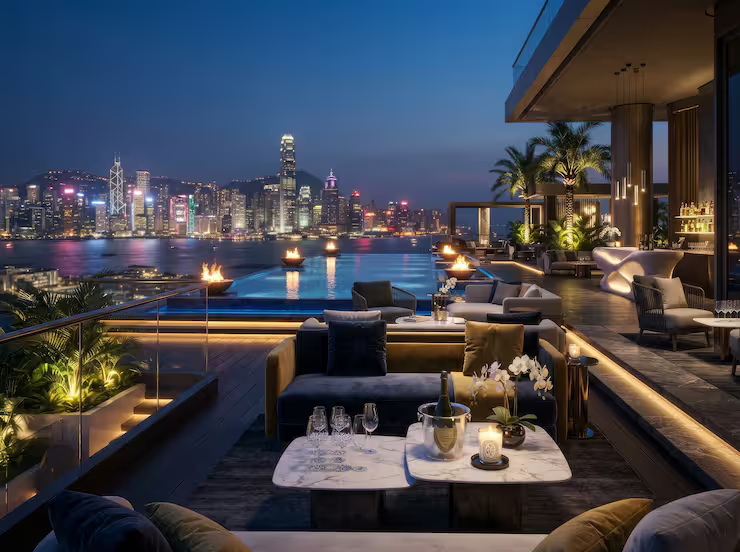
Luxury hotels generally provide a broad range of facilities, which may include fine dining, fitness centers, swimming pools, concierge services, and spacious guest rooms. Some are located near waterfront areas, shopping districts, or major city attractions.
These hotels may suit travelers who value extensive on-site services, carefully designed interiors, and convenient access to restaurants and entertainment. However, facilities vary by property, and not every luxury hotel offers the same experience.
Travelers should review room categories, included services, accessibility, and any additional charges before confirming a reservation. The hotel category alone does not guarantee that a property will match every guest's preferences.
Business Hotels
Business hotels are designed to support work-related travel. Common features include reliable internet access, work desks, meeting facilities, convenient transport connections, and services suited to short stays.
Many are situated near commercial districts, office buildings, conference venues, and transport hubs. These locations can be particularly useful for travelers with scheduled meetings or limited time between appointments.
When selecting a business hotel, consider the distance to the actual workplace or event venue rather than relying only on the hotel's general location. Quiet rooms, internet reliability, early breakfast options, and suitable working space may also be important.
Boutique Hotels
Boutique hotels often emphasize distinctive interior design, a smaller property layout, or a particular neighborhood character. Some operate in restored buildings or feature architectural details that reflect the surrounding area.
They can appeal to travelers seeking a more individual atmosphere than a large hotel complex. However, room sizes, elevators, reception hours, and on-site facilities may differ considerably.
Guests should check whether the property has the practical features they need, especially when traveling with children, carrying large luggage, or requiring accessible accommodation.
Budget Hotels and Hostels
Budget hotels and hostels provide options for travelers who prioritize essential accommodation and spend much of their time exploring the city. Depending on the property, facilities may include compact private rooms, shared spaces, communal kitchens, or shared sleeping areas.
A lower-cost room may have limited storage, a smaller bathroom, or fewer services. Travelers should check the room's actual layout, bathroom arrangements, housekeeping policies, and noise conditions before booking.
It is also useful to compare the total reservation amount and included amenities rather than evaluating accommodation solely by the advertised nightly rate.
Family-Friendly Hotels
Family-friendly hotels may provide connecting rooms, larger room configurations, child-oriented facilities, laundry services, and convenient access to attractions. Some offer swimming pools or dining options suitable for different age groups.
Families should confirm the maximum occupancy of each room, the availability of suitable beds, and whether a child's accommodation arrangements meet the property's rules.
Location is particularly important for families. A hotel near public transportation, parks, food outlets, and planned activities can reduce the effort required to move around Singapore with children.
Popular Areas to Stay in Singapore
Singapore's hotel districts offer different advantages. Selecting an area based on the purpose of the trip can help travelers make better use of their time.
Marina Bay
Marina Bay is known for its waterfront setting, contemporary architecture, city views, and proximity to major attractions. Hotels in this area can provide convenient access to landmarks, dining establishments, and parts of the central business district.
The area may suit first-time visitors who want to explore well-known sights and enjoy an urban environment. Travelers should still check walking distances and transport connections because a nearby landmark may not be directly accessible from every hotel entrance.
Orchard Road
Orchard Road is a major shopping district with department stores, shopping centers, restaurants, and hotels. It may appeal to visitors who plan to spend time shopping or prefer a busy commercial environment.
The area has public transport connections that help travelers reach other parts of Singapore. Hotel selection should take account of the specific MRT station, the distance from the property, and the planned daily itinerary.
Marina Centre and Bugis
Marina Centre offers access to shopping, entertainment, and central attractions, while Bugis combines retail areas, dining options, cultural sites, and transport connections.
These districts may suit travelers who want a central location without focusing exclusively on luxury waterfront accommodation. As with other areas, conditions vary between individual streets and properties.
Chinatown
Chinatown combines heritage architecture, cultural attractions, food destinations, and modern urban development. Accommodation ranges from smaller boutique properties to contemporary hotels.
It can be a practical base for visitors interested in local food and cultural exploration. Some streets are lively during the day and evening, so travelers who value quiet surroundings should check room orientation and nearby activity.
Sentosa Island
Sentosa is associated with beaches, leisure attractions, resorts, and family-oriented activities. Hotels here may suit visitors planning to spend a significant portion of their trip at island attractions or enjoying a resort-style environment.
Travelers whose plans involve frequent visits to central business districts should consider the additional journey time. The island's accommodation options and transport arrangements should be assessed in relation to the full itinerary.
Understanding Singapore Hotel Facilities
Hotel facilities can make a stay more comfortable, but their usefulness depends on individual needs.
Internet access is important for navigation, communication, remote work, and travel arrangements. Guests who need consistent connectivity should review the hotel's stated internet facilities and any relevant usage limitations.
Air conditioning is another important consideration in Singapore's tropical climate. The city is generally warm and humid throughout the year, so room temperature control can influence sleep quality and comfort.
Other useful facilities may include laundry services, luggage storage, elevators, fitness centers, swimming pools, restaurants, and accessible entrances. Travelers arriving early or leaving late should confirm luggage storage arrangements and check-in or check-out conditions.
Room features also deserve attention. Bed configuration, window availability, bathroom design, storage, sound insulation, and workspace can affect the experience more directly than decorative features.
How to Choose the Right Singapore Hotel
The most suitable hotel depends on the purpose of the visit, the number of travelers, and the places they intend to visit.
Start by mapping the main activities planned for the trip. A business traveler may benefit from accommodation near a conference venue, while a family may prioritize access to attractions and convenient dining options. Visitors interested in shopping may prefer Orchard Road, whereas travelers seeking beaches and leisure facilities may consider Sentosa.
Next, examine the transportation network. Singapore's MRT system and bus services make it possible to reach many destinations without a private vehicle. However, the distance between a hotel and the nearest station can affect the convenience of everyday travel.
Room size and occupancy should also be checked carefully. A room suitable for one person may feel crowded for two adults with children and luggage. Travelers should verify the stated room dimensions, bed configuration, and occupancy rules where available.
Finally, review the booking conditions. Cancellation policies, payment schedules, deposits, check-in requirements, taxes, and additional charges may vary. Understanding these details before making a reservation helps prevent unexpected complications.
Transportation and Accessibility Near Hotels
Singapore has an extensive public transportation network that connects many residential areas, commercial districts, shopping centers, and attractions. Staying near an MRT station can make city travel easier, particularly for visitors who plan to explore several neighborhoods.
Nevertheless, not every destination is equally convenient by rail. Some attractions require a bus connection or a walk, and routes may involve transfers. Travelers should estimate complete journey times rather than looking only at the distance between two locations.
Visitors arriving at Changi Airport should also consider airport transfer arrangements, luggage requirements, and arrival times. A hotel with convenient transport access may be more useful than one that appears closer on a map but requires a complicated route.
Travelers with mobility requirements should check step-free access, accessible guest rooms, elevator availability, and the suitability of nearby public transport facilities. These features should be confirmed directly with the accommodation provider when they are essential.
Hotel Booking Considerations and Local Travel Etiquette
Before reserving a Singapore hotel, compare room types, location, included amenities, and booking conditions. Recent guest feedback may help identify recurring issues involving cleanliness, noise, maintenance, or service, although individual experiences can differ.
Check whether breakfast is included, whether the room has a private bathroom, and whether the property provides housekeeping or other services according to your expectations. If traveling during public holidays, major events, or school vacation periods, it is sensible to plan ahead because accommodation availability and demand can change.
Guests should also respect the property's rules regarding smoking, noise, visitors, and shared facilities. Singapore maintains specific regulations in public spaces and accommodation settings, so travelers should follow posted instructions and local requirements.
A well-planned hotel stay depends on realistic expectations, clear booking information, and a location that supports the purpose of the visit. Taking time to compare these factors can help travelers find accommodation that fits their needs without unnecessary complications.